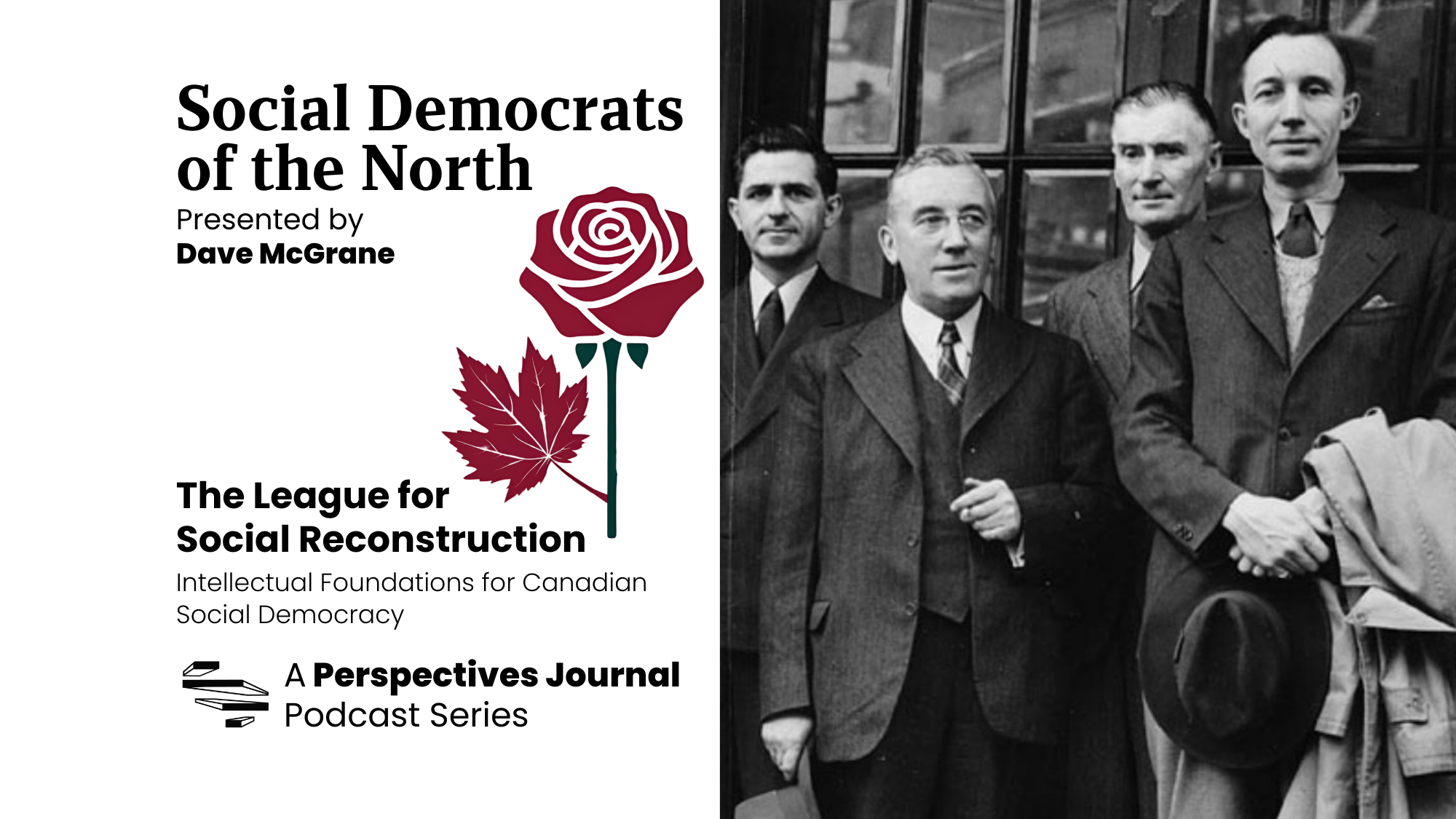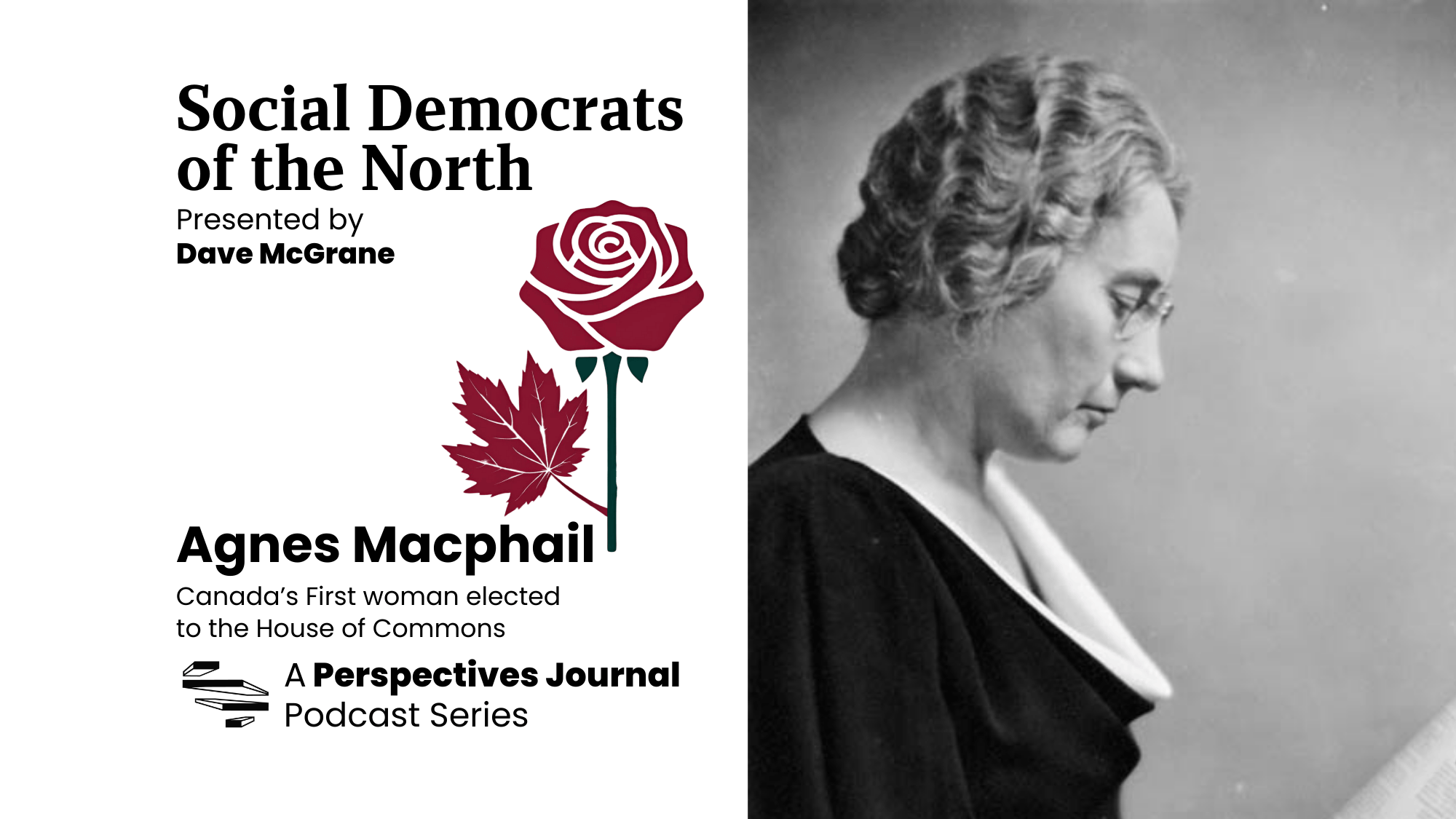

Christianity has a long history of shaping public policy in Canada. Historically, Christian groups such as the Social Gospel movement have served to reform and create effective social policy as a moral project of collective responsibility. The 1933 Regina Manifesto, the founding program of the Co-operative Commonwealth Federation, was profoundly influenced by the Social Gospel and called for the nationalization of transportation, communications, electrical power and other services. The Social Gospel movement also proposed social service programs such as publicly funded health care that would be seen as deeply aligned with progressive objectives.
Despite the progress Christian social movements have delivered onto Canadian society, other conservative movements have also held back these achievements by suppressing the gains made on women’s rights, reproductive autonomy, and the human rights of LGBTQIA2+ communities. Christianity as a political movement was also used as a tool of colonization that led to the genocidal residential school system and the intergenerational trauma of Indigenous communities. In the contemporary context, the increasing power of Christian nationalism and the Canadian far-right cannot be ignored in today’s public policy discussion.
The Language of Parental Rights
For decades, the language of Christian nationalism from the United States has steadily seeped into Canadian discourse, and is now finding substantial influence in Canadian public policy. Conceptually, Christian nationalism can be understood as “an ideology that is based around the idea that this is a Christian nation, that this was founded as a Christian nation, and, therefore, it should be a Christian nation today and should be so in the future.” Language around ‘parental rights’, including the terminology of ‘parental rights’ in and of itself, can be found in Alberta’s proposed anti-trans legislation which ignores the concerns of families of trans youth harmed by the legislation. This concept is, “predicated on the belief that parents have a right to be informed of their child’s choice of name and pronouns at schools and that trans youth should not be allowed to change the names and pronouns they use at school without parental consent.”
Similarly, the invocation of parental rights language has become intertwined with broader discourse in Alberta around the privatization of education, enabling increasingly commodified public education. As the Canadian Centre for Policy Alternatives notes, “Privatization in education extends beyond the existence of private schools. It involves the redirection of public funds to private entities, whether through subsidies to schools or families. Alberta’s private schools receive 70% of the per-student funding that public schools do—one of the highest levels in Canada.”
The language of parental rights, however, is not new. It has long been used by conservative Christian political movements. According to The Guardian US correspondent Lauren Gambino, “The origins of the ‘parents’ rights’ movement, experts say, can be traced back to the 1925 ‘trial of the century’ in which a Tennessee biology teacher was fined for teaching evolution in violation of state law. The term has been invoked repeatedly in the decades since, notably in clashes related to desegregation, the red scare, sex education and homeschooling.” Though the verdict was ultimately overturned, the 1925 State of Tennessee v. John Thomas Scopes case is still recognized as a critical battle between fundamentalist Christian beliefs and modern science.
Christian conservatives have also had a long history invoking parental rights in Alberta to provoke education policy reform: “In Alberta, the efforts of conservative groups invoking parental rights to secure public funding for private education date back to the 1960s. These efforts were led primarily by Dutch immigrants who arrived in Alberta in the mid-20th century. These immigrants belonged to the Dutch Reformed branch of Protestantism, and did not feel that either the public or Catholic school options met their needs. Accordingly, they founded private religious schools for their children, and lobbied the government to fund these schools[…]”
Today in Alberta and across Canada, parental rights still finds appeal among big tent far-right movements such as the 1 Million March 4 Children which first occurred in 2023. While loosely organized, the parental rights demand extended beyond its traditional conservative Christian appeal and found common appeal among conservative Muslims and other religious groups protesting existing and proposed policies to 2SLGBTQIA+ youth. In the same year, Christian nationalist parental rights organization ‘Action4Canada’ claimed that it was their successful lobbying that led to the Saskatchewan Party government’s adoption of anti-2SLGBTQIA+ pronoun and sexuality policies. Across Canada, language and policies stemming from American conservative Christianity continue to influence public policy impacting children, youth, and families.
Neoliberal Retrenchment, Moral Charity, and Prosperity Theology
Like the language of parental rights, the concept of so-called “moral duty” has also been used to rationalize the withdrawal of the state from social responsibility. While religious institutions serving the social good through this sense of moral duty have also lent themselves to progressive movements like the Social Gospel, the fusion of Christian paternalism with neoliberal economics has also made this concept a regressive tool for conservative ideologies.
Organizations such as the Salvation Army and The Mustard Seed serve a critical need in their local communities and often serve as an essential pillar of social services. Still, their institutionalization reflects the outsourcing of social welfare to private, typically faith-based organizations from the democratized power of the state. Instead of rights to things such as food or housing, the state defers these needs to Christian charities that enact social controls and conformity as conditions for redistribution. Often, such organizations require prayer or participation in religious programming for those in need to receive support. In a functional society, however, these services and supports would be considered inherent rights. But when assistance becomes conditional on moral conformity, the social contract weakens as paternalistic charity does not replace social justice.
The rise of personal charity mixed with religious moral duty since the 19th century, in lieu of state support, is also intertwined with “prosperity theology.” The prosperity gospel is a Christian movement stipulating that God grants material wealth and wellbeing to those of strong faith. Implicit in this gospel movement is the mirror teaching which observes that poverty is a material condition impacting those lacking faith and moral resolution.
While the more explicit prosperity theology is commonplace in US Christian megachurches, its ideological strain has found a subtler expression in Canadian conservative (and electoral Conservative) discourse. Figures like Preston Manning, a devout evangelical and founder of the 1987 Reform Party of Canada, articulated a vision of ‘moral markets,’ where faith and enterprise were mutually reinforcing. Manning’s 1992 book, “Building the New Canada,” equated economic freedom with moral freedom, warning that social welfare risked breeding dependency and weakening spiritual resilience.
The essential idea was that economic intervention by the state corrupted both markets and souls. In this framing, charity should be personal and voluntary, not institutional. This framework effectively replicated the Social Gospel movement’s moral tone but inverted its purpose to serve a libertarian end. Prosperity theology provided the ethical justification for austerity, deregulation, and privatization as political choices as well as acts of moral restoration.
Contemporary political rhetoric, such as framing policies as being “for hardworking Canadians,” echoes this belief system. Though implicit, the longstanding ideology of prosperity theology serves to fundamentally shape the worldview of voters and policymakers on public policy. The result is a moral deflection where structural inequality in society is reframed as individual responsibility, and a moral failing, rather than as systemic failure.
Faith, Denial, and the Politics of Memory
If prosperity theology reimagines economic inequality as moral failure, residential school denialism performs a similar function for historical injustice, reframing systemic violence as benevolent intention. Reconciliation is uncomfortable, but discomfort is necessary to truly grapple with colonial realities and the path towards a better society. For some, however, discomfort also means relinquishing power to those who have been disempowered and residential school denial is one such mechanism invented to cling to power.
Denialists emphasize the benevolent educational or vocational goals of the schools, while simultaneously erasing the cultural destruction they continue to inflict on Indigenous Peoples. Conservative public figures like Rex Murphy and Barbara Kay, have often characterized the residential school system as “flawed, but well-intentioned,” accusing critics of “anti-Christian” bias. This framing continues the use of faith as a tool of colonial domination, and as a rhetorical shield against guilt for the crimes committed in its name. In this narrative, the church becomes the victim, and Indigenous survivors become politically suspect and without agency, used by “activists” to discredit Christianity or Western civilization.
By minimizing atrocity, residential school denialism ultimately allows for certain faith-based actors to maintain their claim to moral authority in the public sphere without having to cede power to the disenfranchised. In portraying the Church as persecuted, it binds a perceived attack on religious identity to nationalist sentiment as an attack on Canada’s nationbuilding institutions like the residential school system, uniting moral righteousness with political grievance. To frame history as ‘culture war,’ it renders Reconciliation into an ideological threat, rather than an ideological imperative.
Notably, this denialism rampant within Christian nationalist tendencies and far-right movements is not reflective of the entirety of Christians in Canada. For instance, Catholic organizations work to uphold the values of Truth and Reconciliation, despite the denialism expressed by some Canadian clergy. The United Church of Canada established the Justice and Reconciliation Fund in 2000 to assist the church in understanding and responding to the legacy of harm and broken relationships that have resulted from the Indian Residential School system. The KAIROS Blanket Exercise, developed in the 1990s by ecumenical educators, presents Canada’s history from the perspective of Indigenous Peoples to churches and other civil society groups.
Conclusion
Faith and progressive politics are not inherently incompatible, however, Christian nationalism and far-right ideology put public policy at odds with religion. From prosperity theology to parental rights to the politics of memory, Christianity continues to shape the Canadian political landscape in progressive and regressive ways. The threat of Christian nationalism will likely continue to grow, as far-right movements are emboldened to supplant religious teachings of the collective good with the moral competition of hyper-individualism. The solution is not an abandonment or a condemnation of faith, but rather, a simple recognition of the power faith holds, coupled with a collective commitment to accountability, to pluralism, and to true justice. Faith can serve the public good when it works alongside democratic institutions. What must be resisted is the use of belief as a political weapon by the right-wing to justify inequality, control education, or rewrite history.