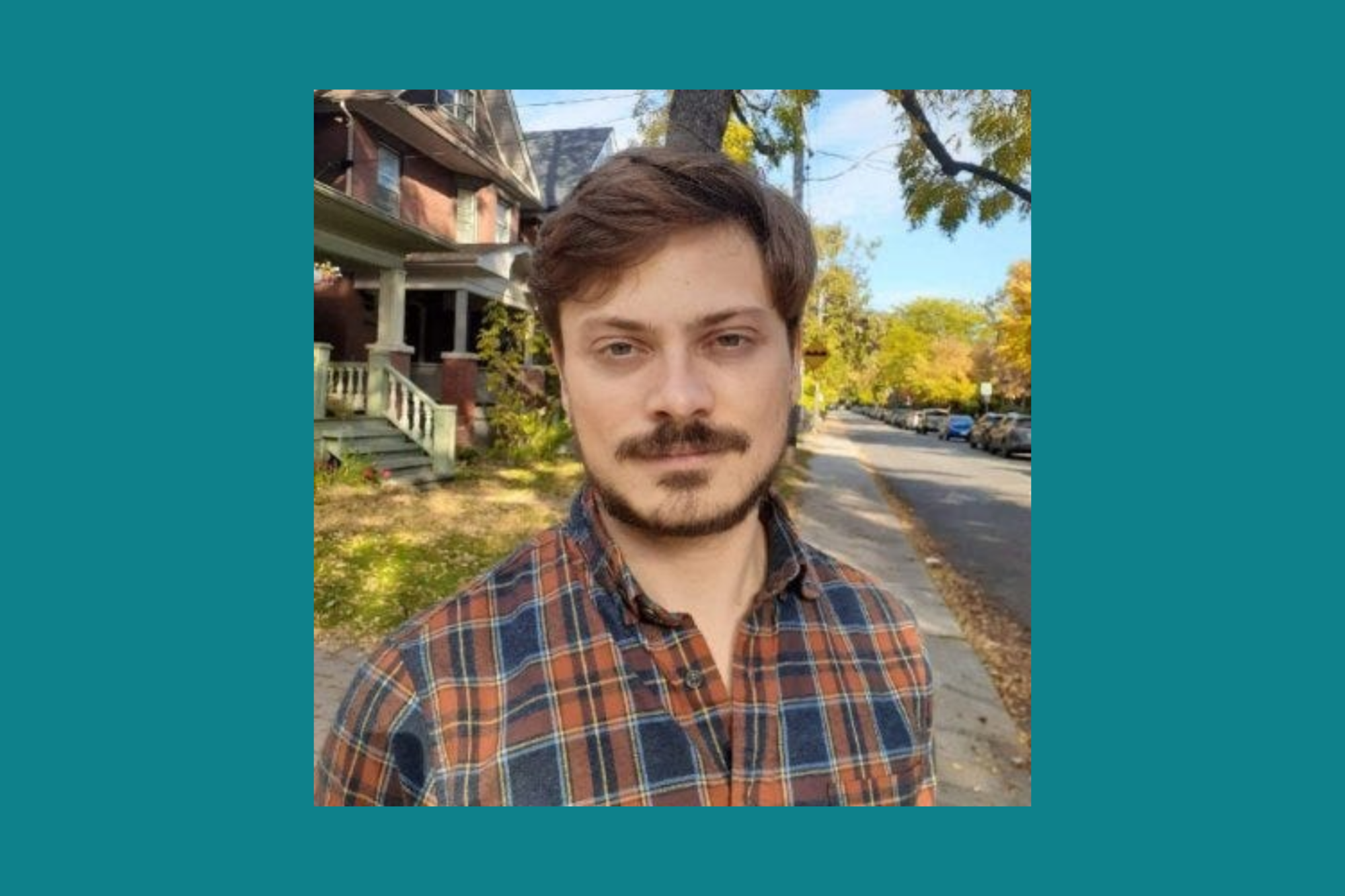
I was born in 1989, on the cusp of the so-called End of History, as the son of two cultural historians specializing in the Middle Ages. These two datapoints, I think, probably explain a great deal about where my intellectual journey has taken me since.
I became fascinated by politics around age ten and my first political thoughts date from the early 2000s: the age of the War on Terror and the US-led invasion of Iraq. I was a precocious kid who didn’t know very much, but I knew I was somewhere on the left and felt an ambient sense of discontent with the world around me — a feeling, I hasten to add, that has not really faded with age. Indeed, the whole of my adult life has been punctuated by a never-ending series of economic and political crises: from the great crash of 2008 to the profound crisis of liberal democratic capitalism we face today. In many ways, both my academic studies and subsequent professional life as a writer have been about trying to understand these crises and make the case for an alternative.
When I arrived to begin my studies at the University of Toronto in September 2008, I was driven by two quite disparate instincts. Having grown up with a pair of Medievalists as parents, I inherited the academic’s inclination to seek out systemic explanations with dispassionate remove and reflexively looked to the past for resources. But the young socialist in me also craved a less detached way of engaging with ideas, politics, and history. Each of these instincts, as it turned out, would soon lead me to different branches of political science.
My initial interest lay in the study of Canadian politics, specifically a tradition of sociologically grounded inquiry rooted in the work of scholars like Gad Horowitz. It was largely thanks to this tradition that my twenty-year-old self first really began to grasp the analytic power of social science to understand and explain the world. Here, I’m particularly indebted to Professor Nelson Wiseman, whose work on the formation of party systems in Canada captivated my young mind and allowed me to understand its political culture in ways my earlier self couldn’t have conceived. For the first time, I began to seriously reckon with the fact that political beliefs and ideologies are socially and materially embedded. At the same time, I became immersed in the history of Canada’s socialist movement, from its origins as a progressive current of dissident Methodism through its emergence as a national electoral force with the formation of the CCF.
Elsewhere, looking to consider more abstract questions, I gravitated toward political theory, which would ultimately be the focus of my graduate studies. The study of political philosophy — which afforded me the opportunity to read the likes of Rousseau, Nietzsche, and Marx in one of the best departments in the world — was everything I hoped it would be.
But something inside me remained resistant to what I took to be the discipline’s broadly idealist approach. That was especially true of the liberal theory I encountered, which often seemed insufficiently attentive to the economic realities that variously ground and constrain political institutions. More generally, the standard practice of reading great texts in isolation felt methodologically limited. If we’re going to study political philosophy, I thought, shouldn’t we also be interested in the social and historical contexts from which its ideas have emerged? (Can we, for example, really interrogate a text like Hobbes’ Leviathan without thinking about the English Civil War?).
This may have been some unconscious parental influence speaking, though I suspect it was also partly carried over from my other studies. Either way, I increasingly looked for some means of reconciling these disparate threads and ultimately found it in the field of political economy.
Though we did not actually meet for several more years, my late friend and colleague Ed Broadbent deserves a special thanks here. Somewhere along the way, I happened upon a copy of his 1970 tract The Liberal Rip-Off and, as it turned out, this mostly forgotten little book helped lead me to many of the answers I was seeking. It can be tempting, I think, to exaggerate the formative significance of intellectual touchstones in retrospect. And, no doubt, there were plenty of other breadcrumbs. But The Liberal Rip-Off introduced me to a way of thinking about philosophy, economics, and political action in tandem that I had never really encountered before. It also, ultimately, led me to a tradition of Canadian political economy that gave expression to some of my deepest instincts. At long last, I thought, here is a critical approach that limits itself neither to purely empirical description or idealist abstraction; one that adjusts for the fact that economic institutions — just like ideas — are socially embedded and can’t be understood in purely quantitative terms.
All of this, I think, is of special relevance in a moment where liberal democracy endures but looks increasingly sclerotic; a moment in which Canadians especially are being compelled by global events to think about their country’s future and place in the world. More than ever, we need a renewed spirit of political and intellectual ambition able to look beyond the suffocating confines of neoliberal economics and reexamine the fundamental premises of our politics and our institutions. In the 1960s and 1970s, pioneering scholars like Mel Watkins and Kari Levitt showed us exactly how this can be done, and the vital legacy they left behind remains an indispensable resource for all those seeking real alternatives in our present.
