
A global shift toward youth enfranchisement
Amid worries about Canada’s aging population, democratic backsliding, and the risk to youth’s civic voice, there’s a promising trend to talk about: In a growing number of jurisdictions, 16- and 17-year-olds are gaining the right to vote. This policy adoption is reflective of a growing body of research demonstrating the political competence of this age group.
Some democracies such as Argentina, Belgium, Germany, Malta, Scotland, and Wales have introduced lower voting ages for certain jurisdictions over the last two decades. When experts examined the civic competencies of 16-18 year old voters in Austria where they are able to participate in national and European Parliament elections, teens demonstrated levels of voting decision-making and engagement that matched adults.
The United Kingdom has just introduced government legislation to extend the voting age by the next general election for the UK House of Commons. With approximately 1.3 million 16- and 17-year-olds in England, and 48,000 in Northern Ireland, if passed this bill would become the single largest enfranchisement of 16- and 17-year-olds since Brazil enacted the change via its new constitution in 1988.
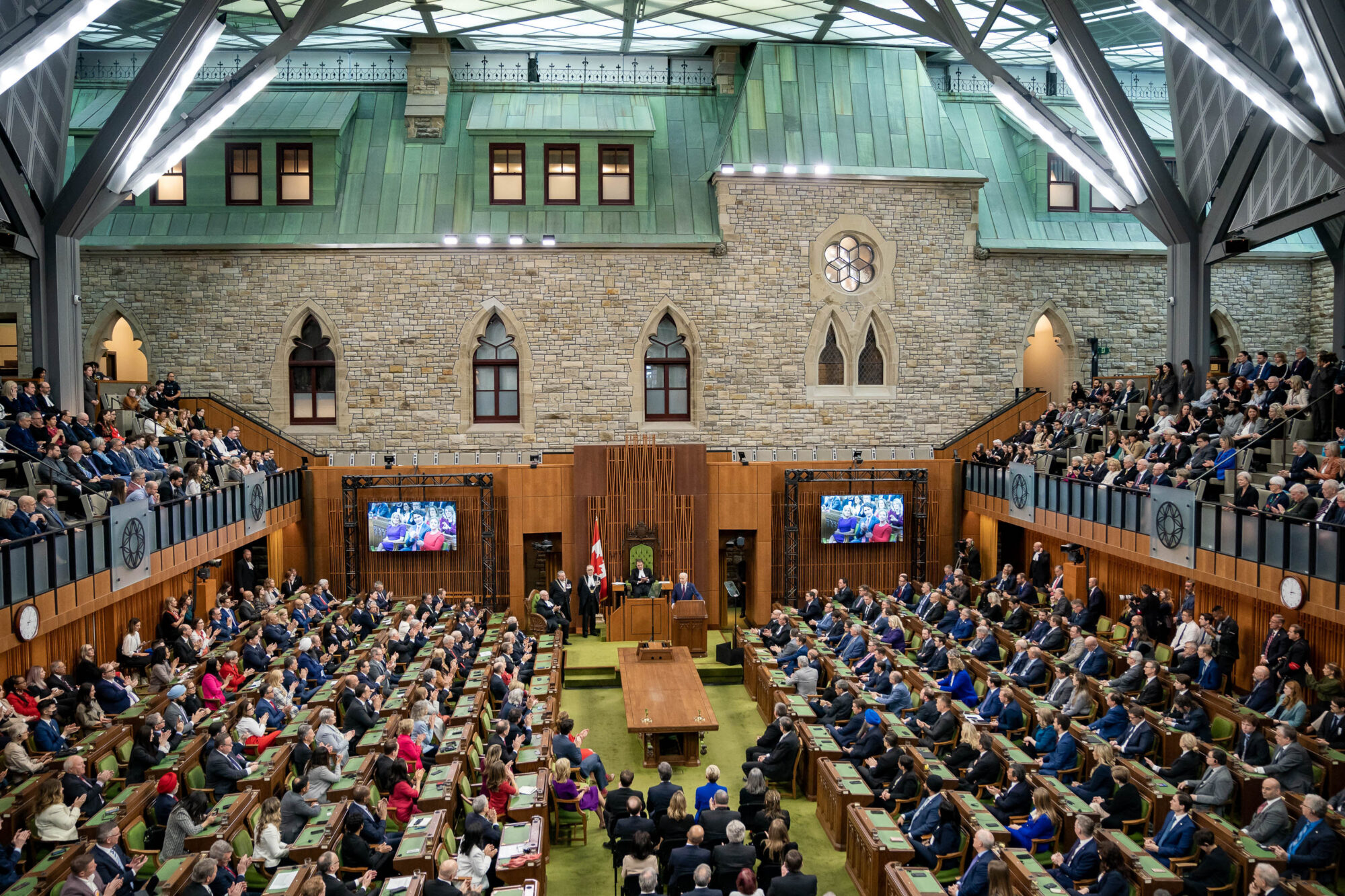
The grassroots push in Canada for Bill S-222, or the Vote 16 Act, is being put forward in the Senate of Canada. As the upper chamber debatesthe Vote 16 Act, the second reading vote will reveal whether this momentum is strong enough to secure Parliament’s first dedicated, exclusive study of youth enfranchisement.
Change from the ground up
Canada has been slower to move on youth enfranchisement — the voting age has sat at 18 across all provincial, territorial, and federal elections. The federal voting age was lowered to 18 from 21 in 1970 and BC was the last province to drop the voting age from 19 to 18 in 1990s. At the local level, however, momentum is building.
In April 2025, Toronto City Council extended the vote to roughly 50,000 16- and 17-year-olds in neighbourhood polls within Canada’s largest city. These polls are a democratic tool that allow the municipal government to gather input within a hyper-local catchment on community decisions like parking changes and Business Improvement Areas. Now more young people will cast their first ballots in their familiar, supportive settings of their family homes and high schools — an environment that helps them build the habit of voting and deepen their stake in their community by taking part in decisions that shape it.
What made this breakthrough possible was patient coalition-building and sustained grassroots momentum. Youth organizers for Vote16 Canada, a national advocacy group dedicated to extending voting rights to 16- and 17-year-olds, worked alongside community groups and local leaders to make the case that expanding the franchise strengthens civic life for everyone. The same pattern is unfolding thanks to Vote16 youth organizers across the country. In Port Hope, Ontario, Sarah Morra has championed youth inclusion on municipal advisory committees. In Squamish, B.C., Jerry and Jason Song testified before council and secured unanimous support for endorsing Vote16. And in Whitehorse, Yukon, Keegan Newnham-Boyd and Juliette Belisle Greetham successfully advanced a motion of support in City Council. Together, these efforts show how determined young advocates are driving democratic renewal from the ground up.
They are not alone. More than 150 Canadian civil society organizations, municipalities, school boards, and Indigenous governments have endorsed or implemented voting at 16.
A reform with a track record
Local movement energy has also shaped provincial conversations on youth enfranchisement. Last summer, the British Columbia Special Committee on Democratic and Electoral Reform held a province-wide consultation tour, hearing presentations from individuals and groups on how to enhance voter participation and democratic engagement in the province. The committee received more than one hundred written submissions and presentations from people who wanted to see the voting age changed to 16 — second in volume to the number of submissions received calling for proportional representation.
In his 2024 report on the Northwest Territories’ most recent territorial election, NWT Chief Electoral Officer Stephen Dunbar formally recommended extending the voting age. The New Brunswick Electoral Reform Commission’s 2017 report also recommended the change.
During Prince Edward Island’s referendum on electoral reform in 2016, the province allowed 16- and 17-year-olds the right to participate as equals with all other members of the electorate. They ended up voting at a higher rate of turnout compared to those aged 18 to 44.
16- and 17-year-olds have also been included as equal participants in participatory budgeting projects in Toronto, Hamilton, Vancouver, Montreal, and Mont-Saint-Hilaire.
From evidence to action
The 2014 Scottish independence referendum serves as an example for the change in public opinion that can occur following the enfranchisement of 16- and 17-year-olds. Scottish youth were found more likely to talk about and engage with politics, and gained more confidence in their political abilities. Before the referendum, in 2011, more than two-thirds of Scots opposed extending the voting age. After the vote, support rose above 50%, and in 2015 when 60% backed the reform — a remarkable turnaround in just four years.
Message testing conducted in the United States by Sam Novey and Michael Hanmer at the University of Maryland similarly found that public support for extending the voting age increased by as much as 12 percentage points when the policy was framed with an acknowledgment of young people’s competence.
At the Senate
In the Senate, Vote16 has its critics: Conservative Senator Yonah Martin recently argued, “18 years old is not a perfect age, but it has become the line where society generally recognizes adult responsibility and capacity.” The evidence, however, is clear: youth can vote at an adult level, and youth voting has benefits to lifetime democratic engagement.
As Senator Robert Black remarked, “We can’t continue to talk about youth as the future and praise them for the value they add to our society but deny them the agency to take direct action and be part of a system that they’re paying into.”