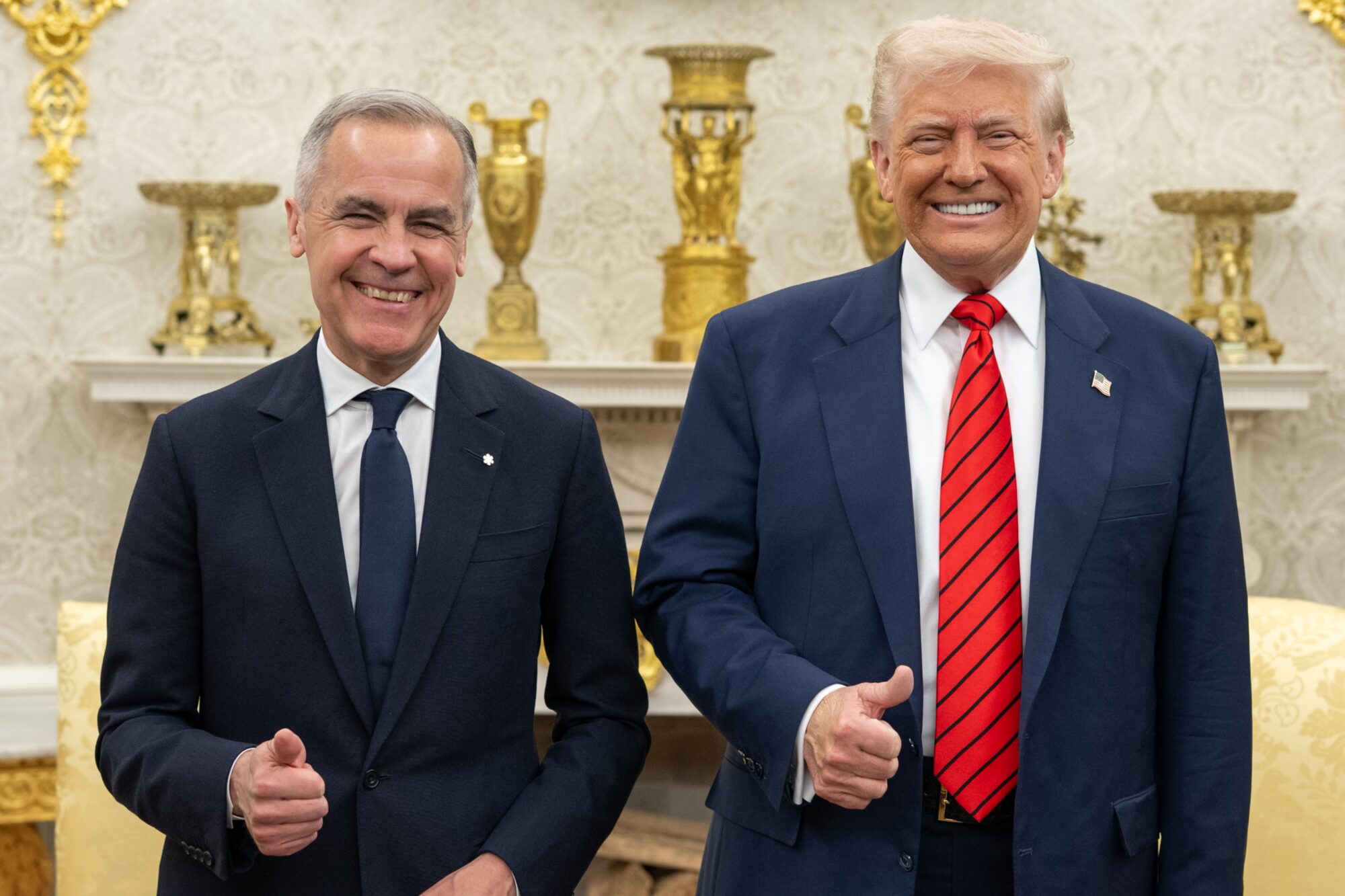
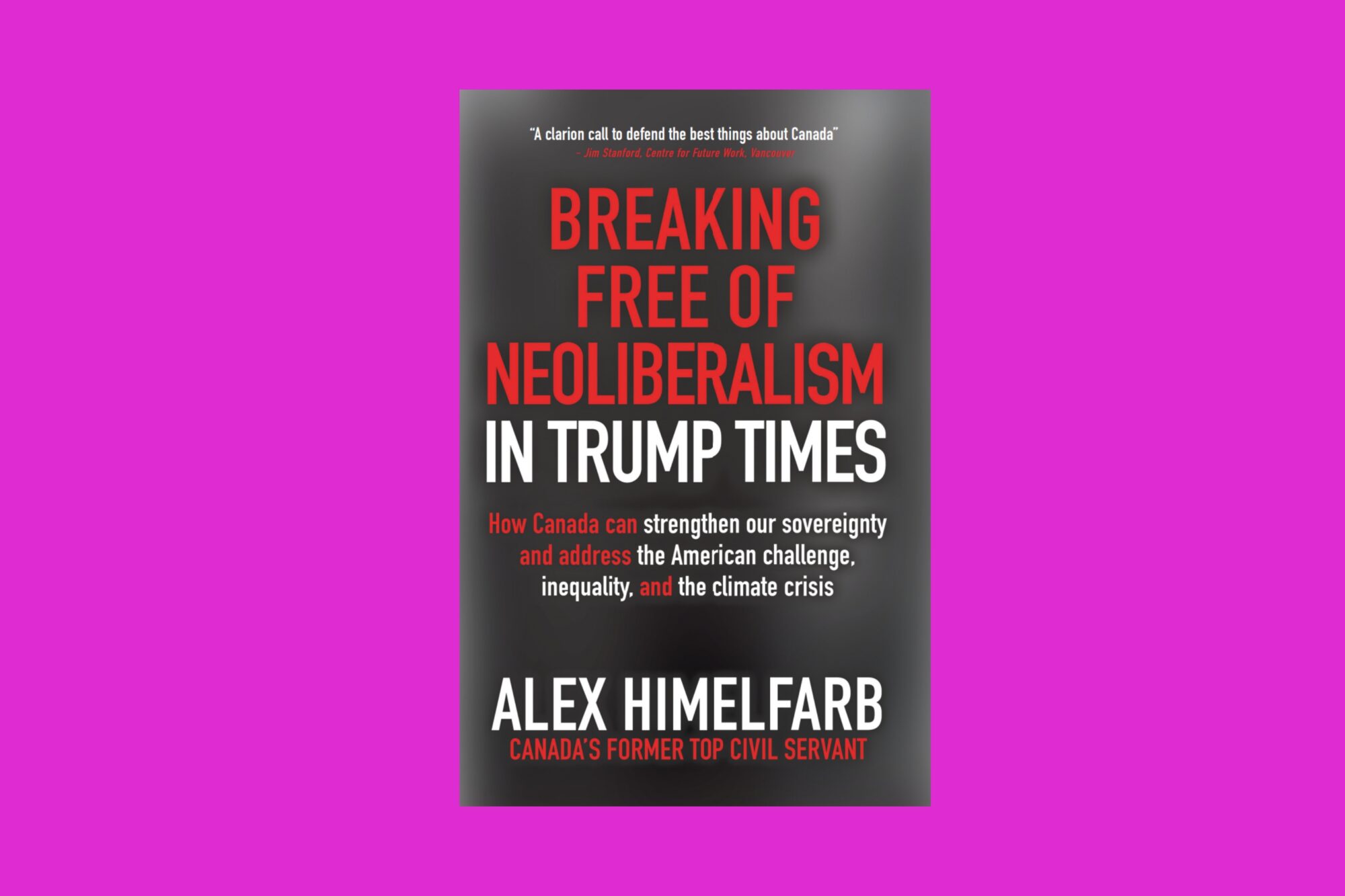
“To build a more resilient Canada,” Broadbent Research Fellow Alex Himelfarb argues in his latest book, Breaking Free of Neoliberalism in Trump Times (Lorimer, 2026) that Canada needs to harness a “surge in patriotism” unleashed by the US Trump Administration’s economic attacks. He is hopeful that,
As with any crisis, Trump’s assault and the tragic dismantling of American democracy we were witnessing amplified our fault lines, but it also rekindled a patriotism very much in the Canadian tradition — not a Canadian version of exceptionalism but something more inclusive, values-based, civic-focused and, perhaps, a revival of a national collective consciousness that had pretty much disappeared after decades of neoliberalism.
It is quite the reclaiming of Canadian maple leaf symbolism and patriotism from the flag waving of the right wing an far-right Convoy occupiers only a few years ago. The Liberal Party brand’s rebound from the depths in early 2025 as the second Trump Administration settled in while the Liberal Party selected the new Prime Minister became synonymous with “elbows up” nationalism amid the NHL’s Nation’s Cup that pitted Team Canada against the USA for the final. Underneath this renewed maple washing, Himelfarb also fears that this patriotism can be squandered or used for regressive purposes.
Patriotism comes with risks. It can lead, for example, to the stifling of dissent, treating any criticism of the country or the path it is on as unpatriotic when debate is most needed. Patriotism has been a tool in the arsenal of right-wing populists to justify imperialism or the kind of assault we were experiencing from our neighbour or to justify exclusion or oppression of some segment of the population.
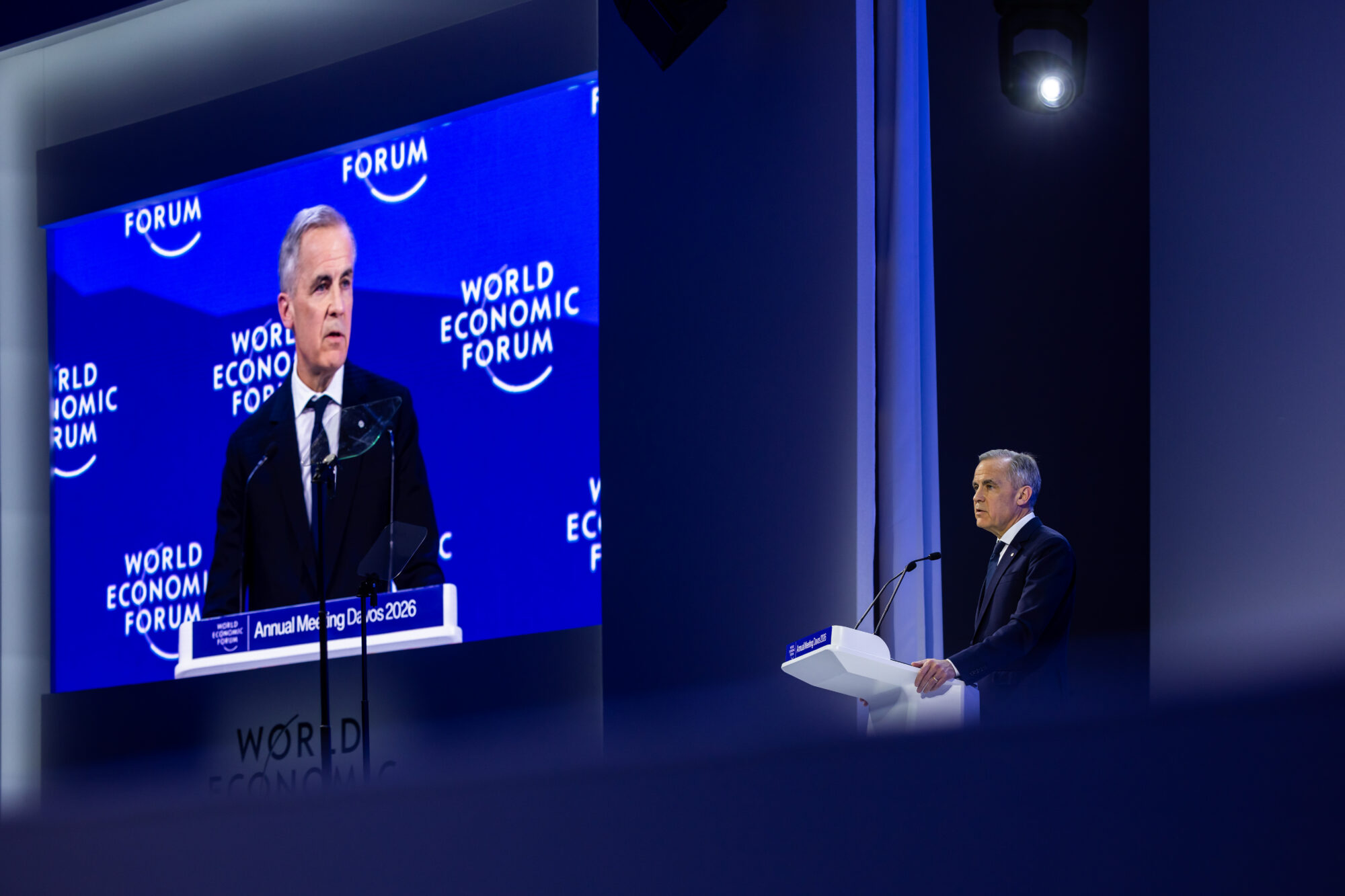
Prime Minister Mark Carney’s September 2026 “Canada Investment Summit,” occurring just a week after this book’s release, brushed the convening of international CEOs and financiers in a patriotic maple glaze as part of a display of the menu of Canada’s critical infrastructure put up to “attract private investment” in the name of diversifying economic ties from the United States. This sell off of Canadian infrastructure to private capital was the less interpreted vision stated in Carney’s earlier January 2026 Davos speech where, “middle powers must act together because if we’re not at the table, we’re on the menu.” The rhetoric, in addition to “elbows up,” became an invitation for these guests of global capital, many of them US-based or tied, to leave their elbows on the table as they scoured the menu of Canada’s economic sovereignty. Ordinary Canadians, labour movements, and civil society were, notably, not invited to this party.
Having published Breaking Free just the week before the Canada Investment Summit, Himelfarb called it:
Certainly, there is much that is new in the Carney agenda — new agencies, an unaccustomed emphasis on speed, the reframing of military spending as an economic driver, AI enthusiasm, a more active role for the state in the economy, “nation-building” projects. There is also much that is reminiscent of the neoliberalism of the 1990s and 2000s — the reliance on the private sector, tax cuts, deregulation and trade deals, even if with new partners. The prime minister’s references to “asset recycling” and selling off airports and ports signalled a sharp return to the decades of privatization. Also familiar is that social and cultural priorities were put on the waiting list, if they were on any list at all. Similarly, the environment and democratic norms took a back seat to economic priorities and to speed. The government also shifted to the right on crime and immigration policy.
As Himelfarb outlines throughout this sequel to 2024’s Breaking Free of Neoliberalism: Canada’s Challenge, neoliberalism’s persistence and transformation is what got us to this Trump moment. Canada, though delayed in its neoliberal transformation from the trends set by US and European neoliberals, and softened by historical circumstance in comparison, is still on the pathway towards this fascist moment that is taking hold globally. Breaking Free is unique among other recent works on neoliberalism in that it puts the now hegemonic global ideology into a Canadian context, with a “bigger hill to climb in Canada.”
Relevant to today’s debate is Himelfarb’s invocation of the “Red Tory” political culture, promulgated by Canadian political scientist Gad Horowitz that may have ironically presented a stalwart defence against neoliberalism’s form in Canada. The global growth and intellectual threads of neoliberalism’s capture of conservatism is outlined throughout Breaking Free with reference to much of the cast of neoliberal characters that advocated for and empowered by capitalist interests found in Quinn Slobodian’s Hayek’s Bastards. Reflecting on incredibly relevant 20th century Tory thinker George Grant and his classic essay, Lament for a Nation, Himelfarb argues that the old conservatism that valued collectivism and commitment to public good was a major barrier against the rising neoliberal tide that sought to change Canada’s economic structure and increase dependence on the United States and away from the British Empire.
Canada’s continued transformation under neoliberalism has upended that old Red Toryism – today, the Conservative Party of Canada struggles to find its coherence two decades after its neoliberal-led re-unification, while former Prime Minister Stephen Harper heaped praise on Carney’s Investment Summit. Carney’s ascension to leader of the neoliberal world coincides with the perigee of neoliberalism in the US and Europe; centre-right and centre-left political projects now indistinguishable under neoliberal consolidation. Meanwhile, the far-right surges across the beachhead and ‘zones’ of the left-wing stand in defence against the tide.
Like Mayor Zohran Mamdani in New York City, the recent Berlin state election saw for the first time the election outcome of Die Linke leadership by Elif Eralp who would be set to become mayor of one of the EU’s centres of power. This victory in Berlin comes with the news that two other East German states have elected governments led by the far-right Alternative für Deutschland. However, with a campaign focusing again on affordability like Mamdani’s and other leftwing progressives, Eralp’s election victory again confirms Himelfarb’s thesis:
Across all the differences among movements of the Left, there is also substantial agreement on at least two important principles: the primacy of democracy and the need for international cooperation. Perhaps what it will take to begin to unwind neoliberalism is democratic renewal, making the market subservient to democracy, and a new internationalism, balancing global competitiveness with international cooperation organized around peace and human and ecological flourishing, while also leaving space for democratic sovereignty.
The Polanyi-esque subordination of the market to society and democracy is also the refrain in new and forthcoming books by Naomi Klein and Astra Taylor (End Times Fascism) and Isabella Weber (Anti-Fascist Economics). Once again in global contexts, Himelfarb puts these new wait-listed and pre-ordered texts in the Canadian context; asking “what kind of country do Canadians want?” arguing for a democratic sovereignty that citizens demand, and not the corporate oligarchy and fascism that have become the byproduct of neoliberal capitalism. Carney’s Liberals at this juncture, a year and half after the timely save of leadership change in both Canada and the US, would largely disappoint Himelfarb in Breaking Free. The renewed patriotism is being used to justify neoliberalism’s life support, rather than political and economic transformation. There is another way forward as progressive pockets are demonstrating around the world – the Carney government’s path away from democracy, it could be argued, is another road towards serfdom under corporate tyranny.