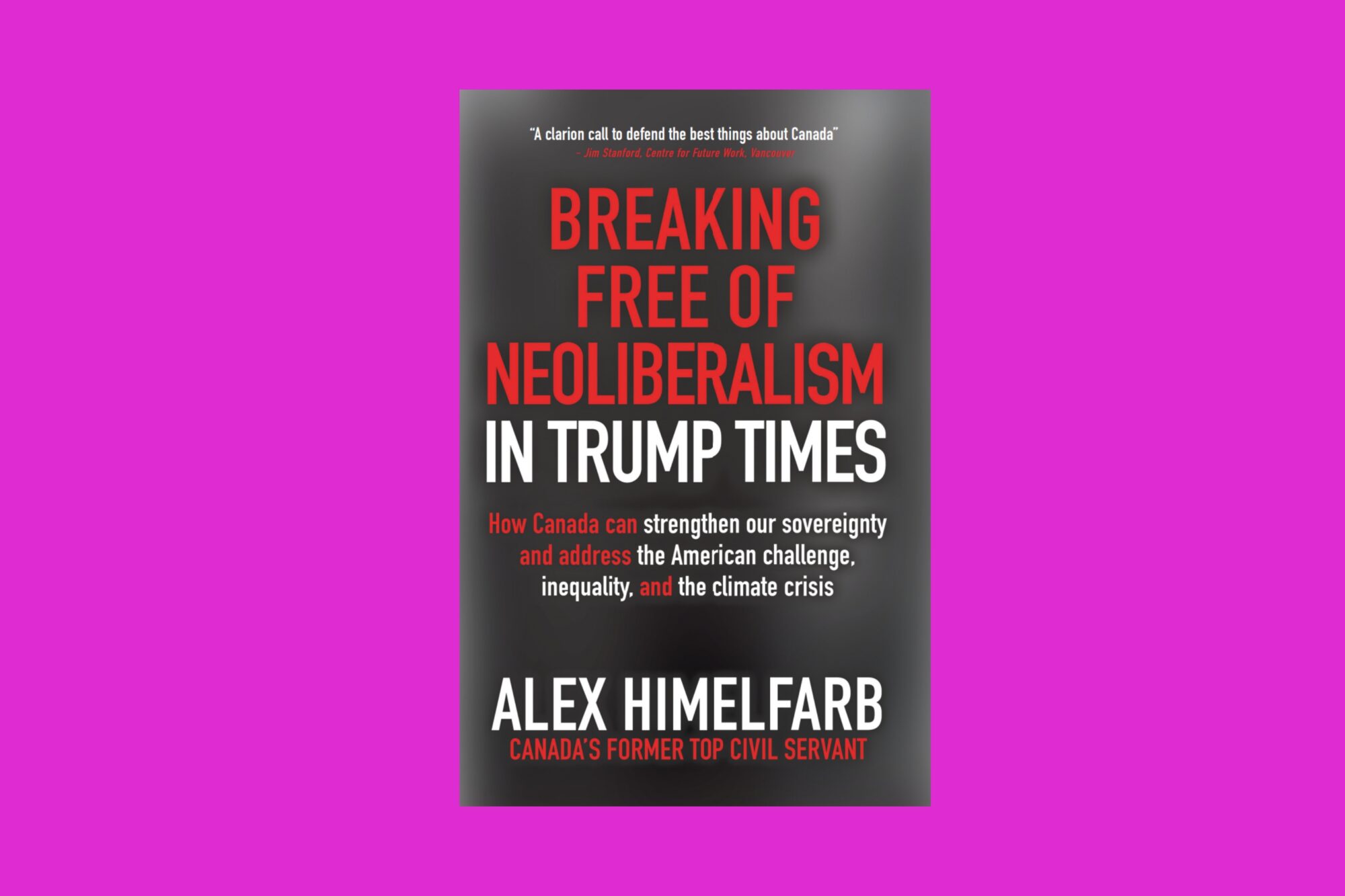
In Breaking Free of Neoliberalism in Trump Times (Lorimer, 2026), Alex Himelfarb explores neoliberalism’s history and troubling reappearance in Canadian politics, and why the need for new thinking is more urgent than ever.
As the world reels from the turmoil of American politics, former senior bureaucrat and Broadbent Research Fellow Alex Himelfarb addresses the challenges facing Canadians after decades of neoliberal thinking have undermined the capacity of governments to protect and support their citizens.
Himelfarb offers an insider’s account of how the neoliberal ideas of Ronald Reagan and Margaret Thatcher were first brought to Canada by Brian Mulroney, Jean Chrétien, and Paul Martin and flourished under the Harper decade. In 2025, Canadians opted for the unifying message of Mark Carney and Elbows Up, and Carney’s speech at Davos in early 2026 recognized that we need a whole new approach to the world’s politics and economics. Yet in a series of rapid decisions, his government has quietly reinforced the neoliberal agenda of unregulated industries, growing inequality, and limited action on climate change. Gaining a majority in mid-2026, the Carney government was free to pursue economic growth to achieve greater independence from US-Canada ties. Yet this single-minded agenda misses much of what Canadians expect and need from their federal government.
The following is an excerpt from ‘Breaking Free of Neoliberalism in Trump Times’ from ‘Chapter 9: Where Are We Going’ that speaks to the present moment, after decades of neoliberalism’s paradigmatic influence over Canada and advanced capitalist societies around the world.
Where Are We Going?
Canada’s future will not be determined in Washington. It will be determined here, by Canadians, by the choices we make together, by the sacrifices we are willing to endure. The fight for survival is nothing new for Canada. As Margaret Atwood wrote in her 1972 book Survival: A Thematic Guide to Canadian Literature, “Canadians are forever taking the national pulse like doctors at a sickbed: the aim is not to see whether the patient will live well but simply whether he will live at all.” Canada is an improbable country, bilingual, multicultural, built on French, English and Indigenous foundations, next door to a giant, regionally diverse and geographically sprawling. In his speech celebrating Canada’s patriation of the Constitution in 1982, Pierre Elliott Trudeau described Canada as “an act of defiance against the history of mankind.” Canada’s survival always took political will, and previous generations always rose to the challenge. Canada’s surge of patriotism in response to the Trump assault shows we are alive. Now begins the fight to build a more resilient Canada.
My parents and I came here as refugees and found in Canada refuge and opportunity. I am always grateful for what Canada gave my family. We always knew we were lucky that fate chose Canada for us. The Trump assault is a reminder that our sovereign right to shape our own future is worth fighting for, sacrificing for. But the Trump shadow should not blot out the challenges we were grappling with before this latest existential crisis.
Trump’s assault on Canada forced us to face up to the reality that our sovereignty, our degrees of collective freedom, had been compromised for decades. We knew the decision to get too cozy with our powerful neighbour came with risks to our cultural and economic sovereignty. In the name of efficiency, we became increasingly dependent on what proved to be fragile supply chains. In the competition for investment, we allowed much of our economy to be foreign-owned, making us vulnerable to decisions made elsewhere. We privatized public assets and vital services, undermining democratic control and accountability. By backing away from industrial policy, we allowed the hollowing out of our value-added industries, becoming once again exporters of raw resources, a resource hinterland to the United States and the world. We allowed digital infrastructure and our cultural space to be dominated by foreign corporations, limiting our access to our own stories and diverse heritage, undermining our ability to control and maintain the privacy of our data and making us vulnerable to malign interference in our politics and our lives.
We have allowed the persistence of poverty and record-breaking inequality that undermine solidarity and trust. Canada’s youth face rising tuitions, a precarious labour market and unaffordable housing. Deep conflicts about carbon taxes and pipelines have cramped our climate plans and threatened our unity. We have too often pursued our development by trampling the rights of Indigenous Peoples instead of building partnerships based on respect for Indigenous knowledge. We have, for years, been less active in the international partnerships essential to managing global crises and increasingly important in an increasingly fractious world.
And, of course, we have had to confront one more “existential crisis” with Trump’s rupture of the liberal international order and his assault on Canada. But we mustn’t forget that we have always had to fight for our sovereignty — over our water, energy, natural bounty, our digital and cultural spaces, our ability to collectively shape our future. The challenge for Canada is not simply to protect our sovereignty but to take it back, to take back our future.
Canada is not powerless. We have the ninth biggest economy in the world, abundant and unique natural resources, a highly skilled, educated and diverse population, a federal structure, however fragile, that is intended to allow us to reconcile diversity and solidarity, two official languages and a positive, if somewhat frayed, view of immigration. We are a destination that still upholds the rule of law. Our politicians still accept the results of elections. We have a Charter of Rights and Freedoms. We are the only country in the world that has multiculturalism in our Constitution.
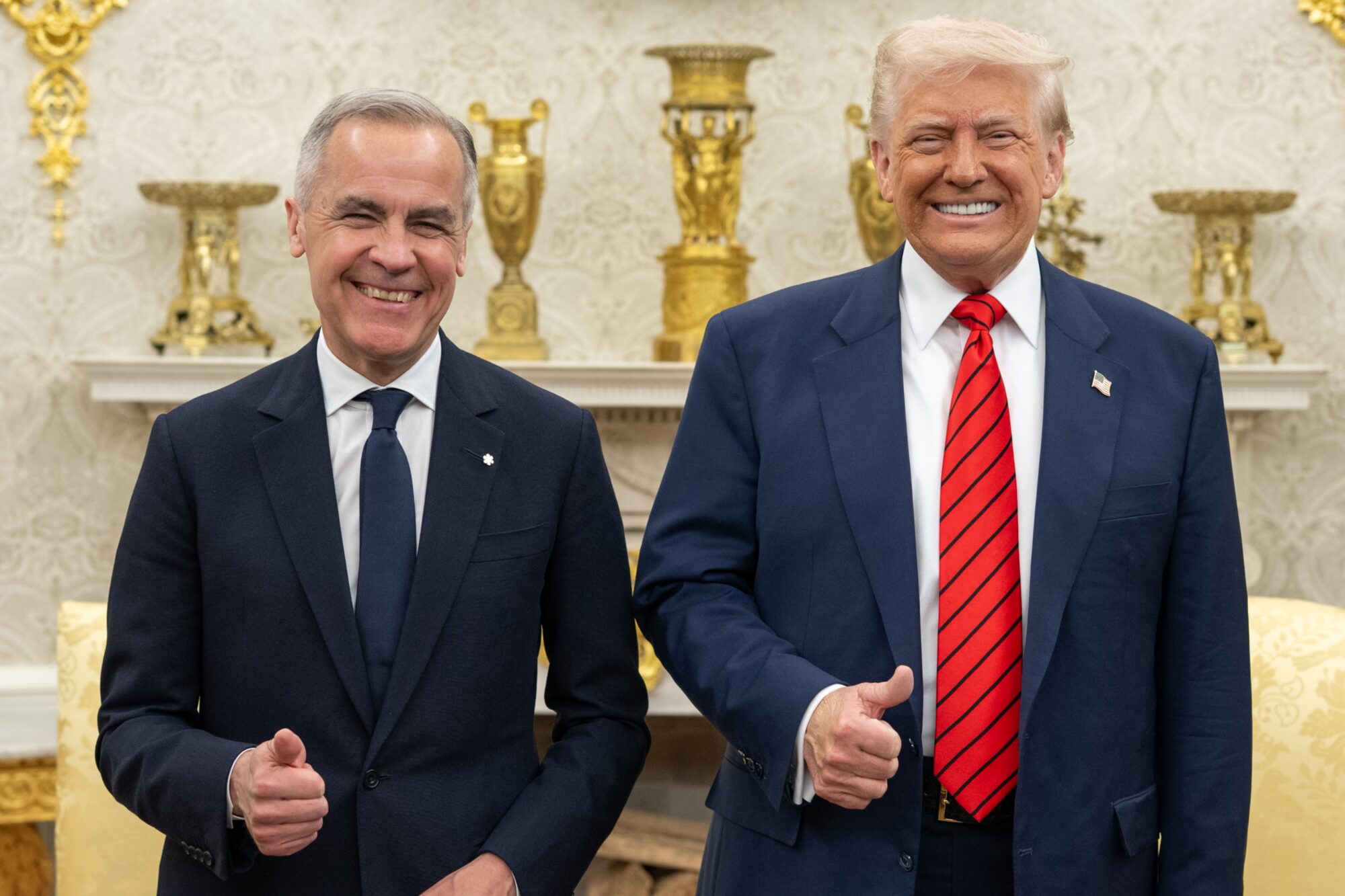
No doubt the Trump assault exposed our faultlines and vulnerabilities, but it also reminded Canadians that Canada’s independence — our ability to shape our own future — is worth fighting for. Mark Carney was elected on a wave of anxiety and patriotism.
Leaders and mandates evolve, and writing before Carney had reached the midpoint of his mandate, it’s impossible to know with confidence how his government would play out. Carney’s reliance on strategic ambiguity makes it even harder. But what did seem clear from the outset was the sharp departure from the priorities of the Trudeau Liberals toward a virtually single-minded focus on the economy and a potentially massive militarization of the economy.
This Time Is Different
The crisis created by the Trump assault on Canada is unlike the financial meltdown or the pandemic, which could be treated as emergencies with a beginning and an end. It is also different from the climate crisis, as the consequences are immediate and undeniable, and this is a crisis theoretically subject to negotiation. There is no negotiating with nature. Of course, there may also be no negotiating with the Trump administration or at least none that would actually be in Canada’s interests. And as Carney well understands, this is not an emergency with a beginning and an end. It is a rupture with a future that we will have to decide and find the strength to build.
History has surely taught us that we ought to stop proclaiming the end of neoliberalism with every new crisis. Apparently, that is not how history works. Nor was there any reason to suspect that Carney was going to lead a counter-revolution. But he made clear that he understood the stakes and that transformative change was coming.
Previous governments had been adapting the neoliberal policy suite, pushing the envelope, green shoots of something different. Trudeau discarded the fiscal orthodoxy of annual balanced budgets, took more ambitious action on climate and, to some extent pushed by the NDP, showed federal leadership we hadn’t seen for decades on social policy, taking a big bite out of child poverty and launching national childcare, dental care and pharmacare, as well as improvements in income supports. Biden was unable to get social policies through Congress, but he opened the door to ambitious public investment in infrastructure and industrial policy with an emphasis on manufacturing and a green transition.
Leaders and mandates evolve, and writing before Carney had reached the midpoint of his mandate, it’s impossible to know with confidence how his government would play out. Carney’s reliance on strategic ambiguity makes it even harder. But what did seem clear from the outset was the sharp departure from the priorities of the Trudeau Liberals toward a virtually single-minded focus on the economy and a potentially massive militarization of the economy. Carney dropped many of the Trudeau climate policies and froze or quietly backed away from his government’s social policy initiatives. He also introduced a number of measures and proposals that would allow the government to fast-track “national interest projects” by overriding laws and regulations — bypassing parliament — and shortening or avoiding environmental assessments — all of which came with significant risks to our democratic norms and environmental health.
On fiscal policy, the Carney government took a more cautious approach than Trudeau, running deficits for “investments” in new projects to drive economic growth but cutting “spending” on some ongoing programs and reducing the size of the public service. He also turned to tax cuts to spur growth and as his go-to means to help families struggling with the high cost of housing and other essentials. His temporary reduction of the excise tax on gasoline in 2026 illustrates the limits of this approach as gas price increases far outpaced the small tax reduction — while oil and gas profits soared. And temporary tax reductions are rarely temporary.
Like Biden, Carney adopted an industrial strategy that used public investments and tax and other incentives to drive a private-sector-led transformation of the economy, although the Carney version was more dependent on extraction and military spending. Carney also put a premium on speed, creating several new agencies for major projects, housing and military investment, for example, presumably as a shortcut to public-service reform while the core machinery of government is apparently left unchanged, aside from cuts reminiscent of the 1990s. The ability to deliver an ambitious agenda requires a robust and confident public service “united by a clearly articulated and collectively understood conception of the national interest.” And the tools to close the gap between the public service and the public it serves. The capacity to deliver also requires strong intergovernmental institutions for managing national initiatives. Other federations have developed mechanisms for collaboration among federal and state or provincial, Indigenous and local governments. Canada has not and, until recently, has avoided collaborative projects; the muscles necessary for a cooperative federalism may have atrophied. Strengthening Canada’s intergovernmental infrastructure would be an excellent “nationbuilding” project.
One wouldn’t have expected the Conservatives to push against the main elements of the Carney agenda. Indeed, a number found the Liberal caucus hospitable to their views and joined.
Certainly, there is much that is new in the Carney agenda — new agencies, an unaccustomed emphasis on speed, the reframing of military spending as an economic driver, AI enthusiasm, a more active role for the state in the economy, “nation-building” projects. There is also much that is reminiscent of the neoliberalism of the 1990s and 2000s — the reliance on the private sector, tax cuts, deregulation and trade deals, even if with new partners. The prime minister’s references to “asset recycling” and selling off airports and ports signalled a sharp return to the decades of privatization. Also familiar is that social and cultural priorities were put on the waiting list, if they were on any list at all. Similarly, the environment and democratic norms took a back seat to economic priorities and to speed. The government also shifted to the right on crime and immigration policy.
Foreign policy was being shaped by the dual and increasingly intertwined objectives of economic growth and defence. The idea of “principled pragmatism” set out at Davos was doing some pretty heavy lifting given the support the prime minister initially gave to the bombing of Iran and the kidnapping of Maduro and his reported musings about participating with the United States on the Golden Dome missile defence system and building “Fortress North America,” whatever that might mean. Principled pragmatism appeared to have given the government very wide latitude indeed and was stretched to its limit when Carney decided to pronounce that the illegal war against Iraq was “worth it” for the still largely imaginary “Game-changing deal” between the United States and Iran.
This was neoliberalism in Trump times — and neoliberalism with very little political pushback. Politically, Carney was on a roll. In this political era when “vibes” seem to be the going currency, the Carney vibes couldn’t have been much better. The Liberal government got its majority without another general election by virtue of several members of parliament crossing the floor to join the Liberal caucus, mostly from the Conservatives but even one from the NDP. The Liberals won three by-elections, and polls showed that the prime minister was not only miles ahead of the other party leaders, he was ahead of his party. To top it all off, he was profiled as one of Time magazine’s most influential people of 2026. His Davos speech seems to have had a longer shelf life than most political fare. It no doubt confirmed for the growing majority of Canadians who supported him that he was the right leader to defend Canada and deal with Trump, and they seemed ready to trust him to get the job done.
Even the proposed massive increase in military spending didn’t produce the expected “guns versus butter” debates, as breaking free of dependence on the United States had become the overriding concern for most Canadians. Trump’s assaults had produced strange bedfellows. But we need a debate about just what our strategic military objectives here are and what we would become when we hit the spending target of 5 per cent of GDP, a level of military spending never before contemplated and which inevitably would squeeze out other priorities and reshape our foreign policy.
One wouldn’t have expected the Conservatives to push against the main elements of the Carney agenda. Indeed, a number found the Liberal caucus hospitable to their views and joined. The Conservatives had, under Pierre Poilievre’s leadership, veered further to the right and were, after Trump, weakened — at least temporarily — by the changed political landscape, the departures and questions about leadership.
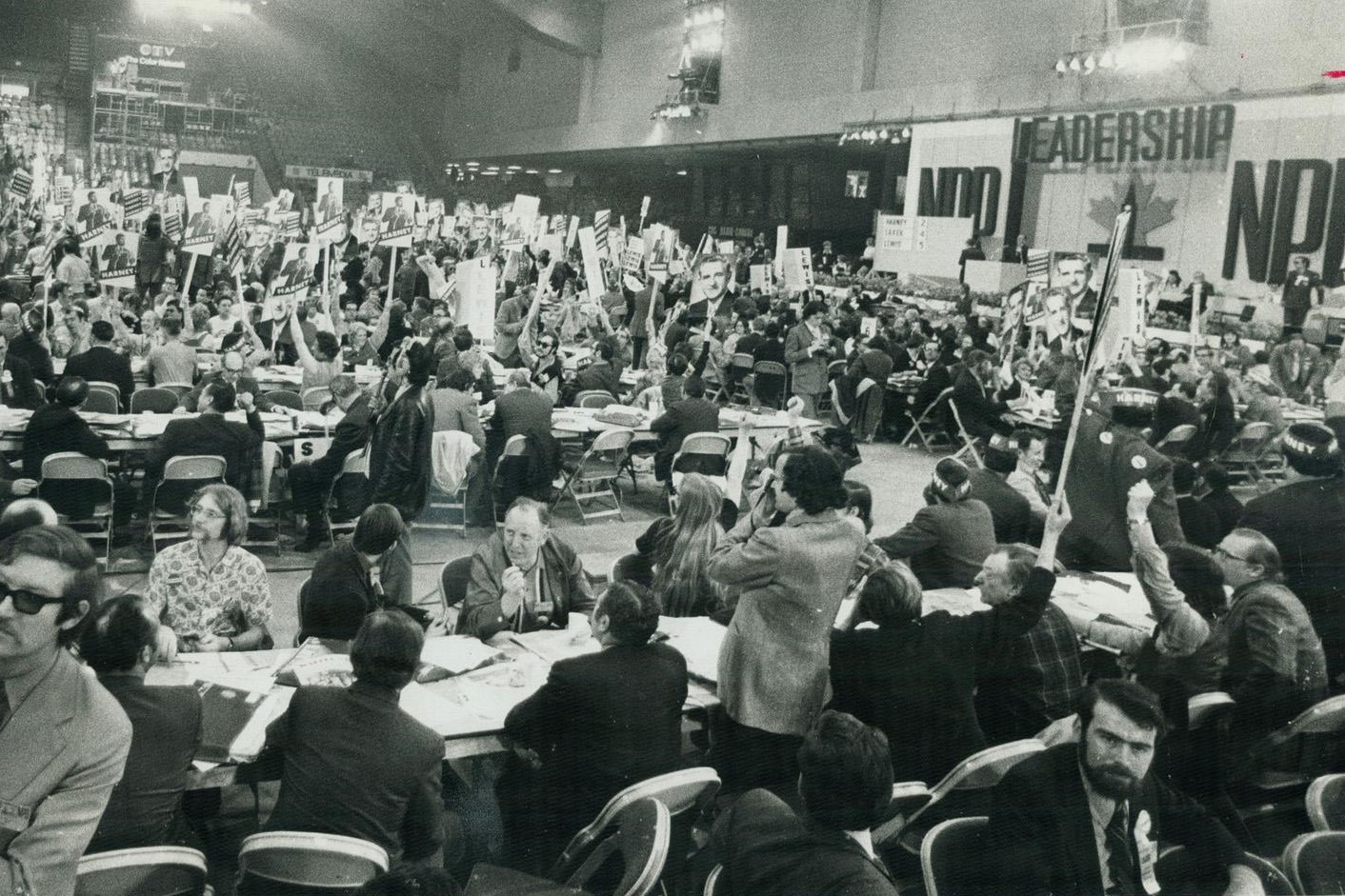
The NDP had, in the past, been effective at pushing the Liberals on social, labour and environmental priorities, but they had been severely weakened, having failed to get official party status in the 2025 election, and were polling in single digits. After the election, the NDP chose a new leader, Avi Lewis, who campaigned as a democratic socialist who would offer a clear departure from the neoliberal frame and, for that matter, from the path the NDP had been on. In the early days of his leadership, he expanded the window of possibility with proposals for public ownership of vital sectors, wealth taxes, major expansion of nonmarket housing, expansion of universal services, Canadian control of digital infrastructure, data and AI systems, green constraints on AI expansion, public digital infrastructure, full implementation of the United Nations Declaration on the Rights of Indigenous Peoples and a green new deal.
What better indication that the Lewis campaign represented a sharp break from the decades of neoliberalism than the almost instant and furious criticism his proposals received, not just from opposition parties but from the mainstream media. In any case, Lewis clearly had a steep hill to climb and probably was pleased that a federal election was not imminent. The NDP has always had to decide between movement and party, how to find the balance between adapting to the political climate and trying to change it. They chose, it seems, movement and change. And that looked to be a commitment to the long game — fight to influence policy now while working to change the political climate. And Elizabeth May, the indomitable leader of the green party continues to fight for the environment and social justice.
For the short term, at least, the Carney government had pretty clear sailing for its pursuit of economic sovereignty, neoliberal style. The parliamentary opposition was relatively weak, and the reluctance of many Canadians to challenge the government is not unusual in the midst of a crisis. But clear sailing is not without dangers.
Breaking Free of Neoliberalism in Trump Times is now available from Lorimer.