Floor-Crossing vs. Party-Democracy
To minimize floor-crossing episodes, mass parties can leverage existing political institutions to make Canada’s democracy more deliberative and participatory.

There are many lessons for today’s labour organizers and social democrats to learn from the FPU as a mass party, such as its deep entrenchment within struggling working-class communities, and the alternative economic and financial institutions it built.

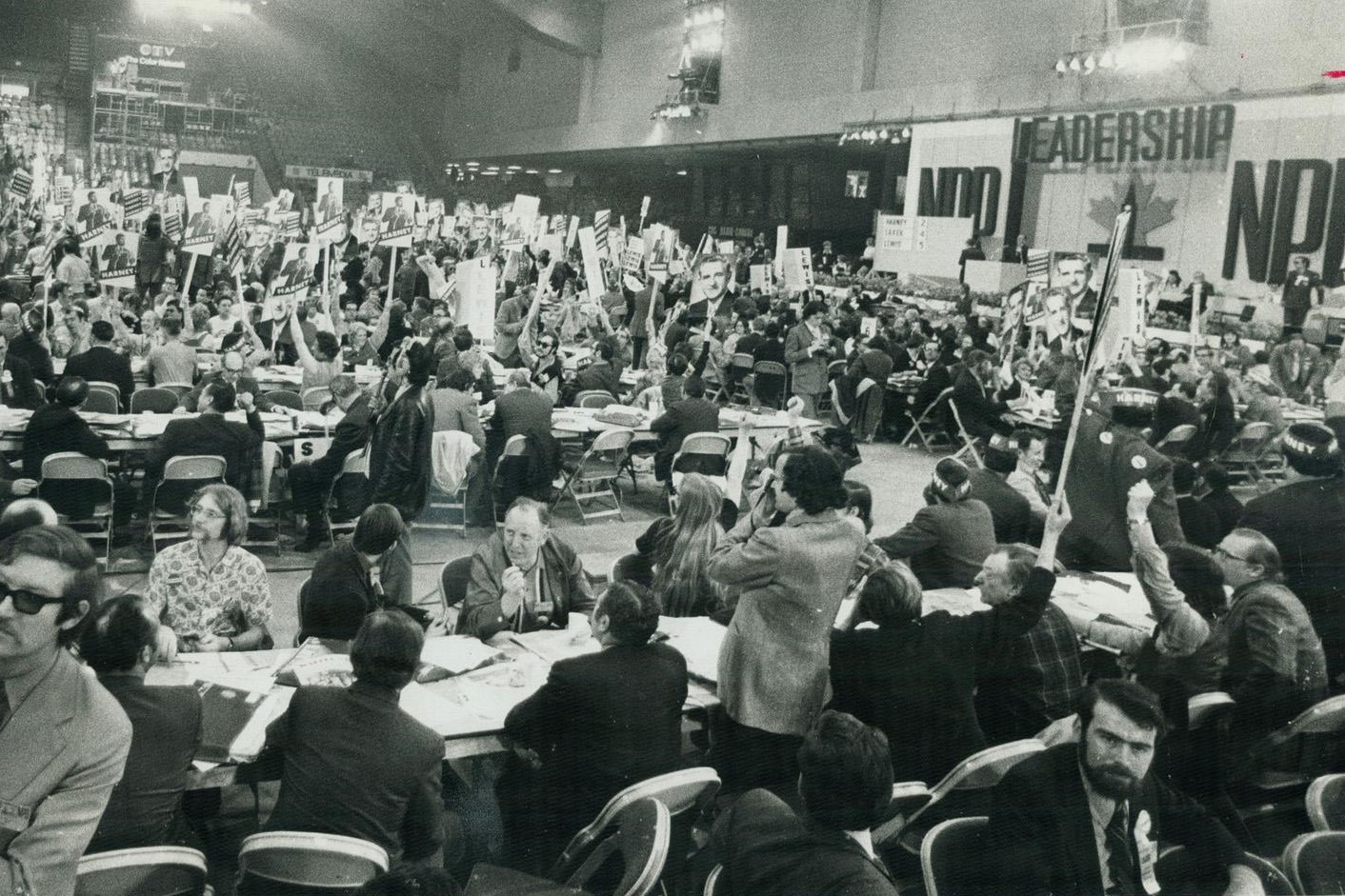
There is an opportunity for the New Democratic Party of Canada and its provincial wings to renew their democratic vision, bringing it to the forefront of changing how public policy is made by embracing deeper public learning and deliberation.

The task of the NDP is to find ways to add to, rather than supplant, its traditional working-class base.

A Vancouver study on ‘Neighbourhood Food Democracy’ created place-based opportunities for knowledge co-creation, community empowerment and setting an agenda for social change.

Canadians are right to be concerned about corporate control of data, algorithmically worsening inequality, and the role of tech companies in disempowering workers.

Misinformation and disinformation are polarizing Alberta politics, stoking division and a reactionary shift to the right.

It’s been said that “the ground game can only take you so far”. But what if the right kind of ground game can count for more than we realize?

In Canada, reproductive healthcare is deeply commodified, affecting access to resources from contraception to fertility treatments. Canadians tend to pride themselves on being “better” than their southern neighbours, but in this instance, being better is not good enough.