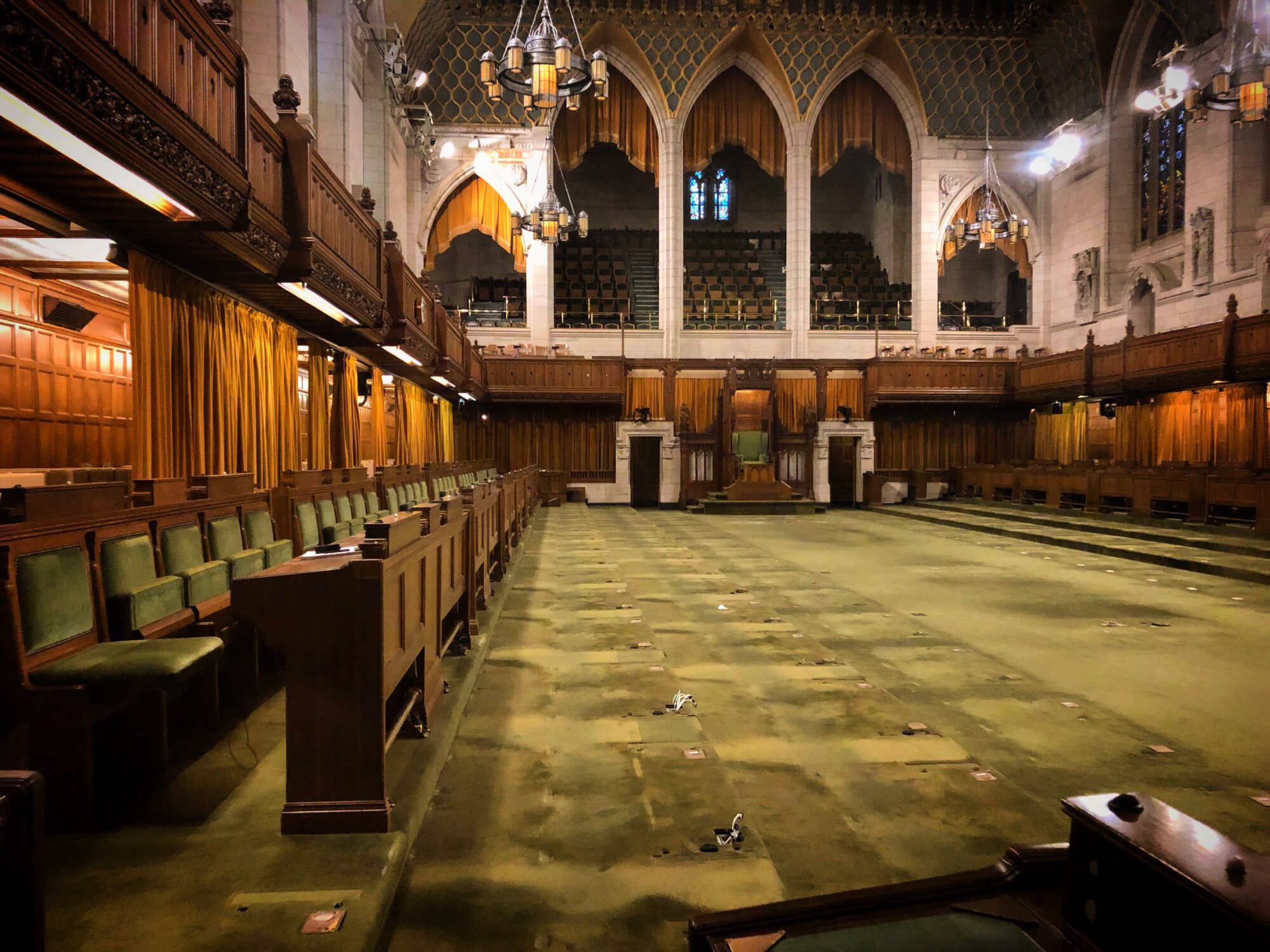
Only one year after they won a minority in the 2025 election, Prime Minister Mark Carney and the Liberals have achieved a majority government. This majority was delivered (thus far, as of time of writing) by five Members of Parliament who “crossed the floor” since the 2025 election, leaving the party they were elected with to join the governing Liberals.
These events have produced an intense debate over the legitimacy of floor-crossing, which is ultimately rooted in a fundamental disagreement over what an elected representative’s job should be in a democratic system. Two competing theories of representation, the “trustee” and “delegate” models, can be seen in the debate over floor-crossing, in Canadians’ common-sense political discourse, and in different elements of our Parliamentary system. However, both of these models are failing in Canada’s actually existing political practice. Instead, a “party-democracy” model of representation holds the promise of leveraging existing institutions to make Canada’s democracy more deliberative and participatory.
The Bad Defence of Floor-Crossing
Before considering the two main theories of representation, there is another, cynical defence of the practice. Some say that floor-crossing is a way for MPs to get a “better deal” for their riding, securing benefits for their constituents in exchange for switching loyalties. This is not a principled view of representation, but an excuse for so-called “pork-barrelling”: the allocation of public resources based on electoral calculus, rather than need, justice, or the common good. This spending can come in the form of local infrastructure or targeted benefits programs, incentivizing projects with short time horizons and high visibility. It also degrades democratic politics into mere haggling among 343 independent bidders, each trying to extract the maximum benefit from the rest of the country. Fortunately, most Canadians aren’t as selfish as this idea presumes, as most of us vote for what we think is best for the country, not what benefits us personally. Thus, treating floor-crossing as a way for MPs to get a better deal for their riding can corrupt politics. There are, however, still more principled explanations for floor-crossing.
Burke would advise today’s floor-crossers to disregard the opinions of their constituents and do what they think is best for the country—their job as MPs is to be responsible and rational, not loyal or obedient.
The Trustee Model: Deliberation via Independence
The “trustee model” of representation holds that electing an MP means granting them the authority to determine the true interests of their constituents, after which an MP must use their own judgement to decide how to act in Parliament. This view is implied by those who claim that “we vote for the person, not the party.” The trustee model’s most famous proponent was the Irish philosopher and MP, Edmund Burke. As Burke explains: “your representative owes you, not his industry only, but his judgement; and he betrays, instead of serving you, if he sacrifices it to your opinion.” Ideally, the representative’s independence ensures that government is deliberative and rational by allowing MPs to change their mind during Parliamentary debate.
Proponents of the trustee model argue that, if MPs obeyed their constituents, Parliament would be left in the hands of people without the time or knowledge to understand complex political issues. As Burke argues, “what sort of reason is that in which the determination precedes the discussion, in which one set of men deliberate and another decide, and where those who form the conclusion are perhaps three hundred miles distant from those who hear the arguments?” Importantly, Burke thought MPs should serve the good of the country, not just their riding: “Parliament is a deliberative assembly of one nation, with one interest, that of the whole […] You choose a member indeed; but when you have chosen him, he is not member of Bristol, but he is a member of Parliament.” Burke would advise today’s floor-crossers to disregard the opinions of their constituents and do what they think is best for the country—their job as MPs is to be responsible and rational, not loyal or obedient.
There is certainly value in ensuring government involves informed, rational deliberation. However, the trustee model easily slides into the elitist idea that a select few enlightened people ought to govern—what Burke called the “natural aristocracy” Even without this explicit elitism, this view of representation is inescapably undemocratic, at least if democracy means government by the people. When MPs follow their own judgement, the citizen’s role begins and ends with choosing who will govern us, not how we will be governed. Or, as French philosopher Jean-Jacques Rousseau remarked, “the people of England regards itself as free; but it is grossly mistaken; it is free only during the election of Members of Parliament. As soon as they are elected, slavery overtakes it, and it is nothing. The use it makes of the short moments of liberty it enjoys shows indeed that it deserves to lose them.”
Under the delegate model, floor-crossing is a refusal to obey constituents’ decision of the party and policies they want their MP to support.
The Delegate Model: Participation via Instruction
In contrast to the trustee model, the “delegate model” idealizes of citizen self-government within institutions of electoral representation by focusing on an MP’s job as a “messenger” who conveys their constituents’ will to Parliament. This view is implied when we say a government “has a mandate” to enact some policy, as mandates were once used as explicit instructions for a representative. It is also implicitly accepted by those who expect politicians to keep their election promises, as this is incompatible with the independence of a trustee. The delegate model also fits how most Canadians engage with electoral politics as studies on voter familiarity with local candidates finds that their evaluation is decisive for approximately 4% of voters, and the influence of a quality candidate depends on political awareness and partisanship.
Under the delegate model, floor-crossing is a refusal to obey constituents’ decision of the party and policies they want their MP to support. Widespread acceptance of this view explains why 74% of Canadians think floor-crossing should not be allowed. When crossing the floor, MPs act as trustees when citizens expect them to act as delegates. Canada’s political institutions may have been built with rules inspired by the trustee model, but our political culture and practice have long since shifted towards the delegate model.
Democratic expectations, and poor political outcomes leading to disenchantment, have driven many reforms based on the delegate model, like the creation of recall mechanisms for provincial legislative members by the BC NDP in 1995 and Alberta United Conservative Party in 2021. The 1990s also saw numerous experiments like the Reform Party’s brief attempt to let constituents decide how their MPs would vote. The NDP has introduced 13 private members bills in the House of Commons between 1999 and 2022 calling to ban floor-crossing. However, most of these reforms have failed to increase citizen participation in government. The few reforms that have been implemented have mostly been ineffective, and more ambitious attempts to create new ways for constituents to deliberate and decide how MPs should vote have struggled with the difficulty of building such institutions from scratch. The largest obstacle to these reforms has been the extreme strength of Canadian parties.
Parties and Party Discipline
The trustee-delegate debate can be reduced to a matter of who controls the vote associated with a seat in Parliament. On the trustee model, a seat belongs to the constituents of a riding but is held in trust by an MP who independently controls its vote—at least until the next election, when voters can choose another MP to vest with this control. On the delegate model, a riding’s vote is actively controlled by constituents via instructions given to their MP. The former accepts a lack of citizen participation to ensure government is deliberative and rational, while the latter sacrifices deliberative rationality to ensure citizen self-government.
However, both models are disrupted by Canada’s extremely strict party discipline. Due to a complex of political, institutional, and societal pressures, Canadian MPs vote with their party 99.6% of the time. This level of party discipline is widely denounced, and is blamed for both preventing real Parliamentary deliberation and disconnecting MPs from their constituents. The fact that MPs vote along party-lines means their party controls their seat’s vote—at least until the next election, when voters can choose another party to vest with this control.
Thus, MPs are neither rational trustees nor loyal delegates. Instead of government by reason or by citizens, Canadian democracy becomes government by parties. If we accept these arguments, then debates over floor-crossing seem like the least of our worries. However, a third model of representation offers the possibility of turning Canada’s powerful parties and strict party discipline into engines of participatory-deliberative democracy.
Not only does this approach deliver both the trustee model’s vision of deliberative government and the delegate model’s vision of participatory government, it’s also particularly well-suited to the reality of Canada’s Parliamentary system.
The Party-Democracy Model: Deliberation and Participation
In the late-19th and early-20th centuries, social democrats around the world tried to advance a more deliberative and participatory form of democracy via the mass party. In Canada, socialists joined with prairie populists to create the United Farmers of Alberta, the Progressive Party, and the Cooperative Commonwealth Federation. The “party-democracy” model transforms political parties from intra-Parliamentary clubs for elites into institutions for organizing citizens, facilitating their deliberative and participatory decision-making, and enacting those decisions in Parliament. Not only does this approach deliver both the trustee model’s vision of deliberative government and the delegate model’s vision of participatory government, it’s also particularly well-suited to the reality of Canada’s Parliamentary system.
First, the rational Parliamentary deliberation praised by Burke is long dead in Canada, if it ever existed. However, mass parties can and often do facilitate deliberations among ordinary citizens. These deliberations are free of the electoral incentives faced by MPs, giving parties a better chance at in-depth, good-faith discussion. Intra-party deliberation is also well-suited for our polarized times. By giving large numbers of citizens frequent opportunities to practice talking and cooperating across relatively small differences, parties can help cultivate the virtues and capacities these same citizens need to bridge the larger differences that exist in society.
Second, reformers aiming to advance citizen control have struggled to build institutions for constituency-level deliberation and decision-making, and the issue of party discipline has defeated attempts to give constituents control over their MPs. By contrast, political parties regularly facilitate members’ decision-making at local, provincial, and federal levels, and strict party discipline can ensure those decisions are binding on MPs. The difference with the party-democracy model is the capacity in which citizens play a role in government. While the delegate model empowers citizens as constituents (organized by geographic proximity), the party-democracy model empowers citizens as members (organized by ideological proximity).
This change would better suit the reality of today’s politics. Canadians do not relate to politics as members of administrative districts on electoral maps—no one feels like a West-Vancouver–Sunshine-Coast–Sea-to-Sky-Countryman or a Côte-du-Sud–Rivière-du-Loup–Kataskomiq–Témiscouatian. Instead, many Canadians identify as conservatives, liberals, sovereigntists, socialists, or democrats, and these identities are significant in how we understand ourselves and relate to politics. Parties have long since come to represent such ideologically defined segments of society, and party-line voting means parties, not individual MPs, are the real representative actors in Parliament today. Thus, giving citizens an active role in government today requires giving them control over parties.
Finally, the party-democracy model opposes the way that floor-crossing substitutes an MP’s personal control for that of our real representatives (political parties) by transferring a seat and its vote from one party to another, thereby unilaterally rebalancing representation in Parliament. Floor-crossing is an abuse of the de jure rules of our Parliamentary system to undermine the de facto functioning of our Parliamentary democracy.
Conclusion
Decades of failure to halt or reverse the growth of party discipline, restore old Parliamentary norms, or develop new institutions for citizen control have shown both trustee and delegate models to be unrealistic in Canada’s current political system. The party-democracy model addresses these failures by working with the institutions we have—strong parties and strict party discipline—to advance a more deliberative and participatory democracy. Of course, Canada’s Parliamentary system is far from perfect by the standards of the party-democracy model.
First, our parties need significant internal reforms. We need to democratize our parties to ensure they’re actively and continuously controlled by members, rather than by party leaders who too often treat members’ decisions as merely consultative. We also need to significantly grow parties’ memberships. Even small parties are a more realistic foundation for building a mass-participatory democracy compared to the constituency-level institutions favoured by the delegate model, on account of the former actually existing. Still, membership rolls are currently too small for parties to yet serve as mechanisms for citizen control. Experience and research suggest that advancing intra-party democracy will make it easier to grow parties’ membership by giving people more reason to join.
Second, we need to change our electoral system to proportional representation (PR). The fact that Canadians vote based on the party (not the person) and are represented by that party (not their MP) means PR is needed to equalize the voting power of Canada’s actual, ideologically-unified ‘constituencies.’ PR redistributes seats to reflect ideological shifts in the population as measured by an election. The party-democracy model helps us understand and explain why PR is essential to improving the democratic legitimacy of Canada’s actually-existing Parliamentary system.
Finally, the party-democracy model justifies one more reform: prohibiting floor-crossing. This helps to uphold party discipline, prevent unilateral rebalancing of representation in Parliament, and thereby improve democratic decision-making as the will of citizens reflected in their representation. These reforms will be difficult, but they are far more realistic than what would be required to salvage the trustee or delegate models. Instead, reformers should swim with the currents of Canada’s evolving political system and work with the institutions and practices we have.