Introduction
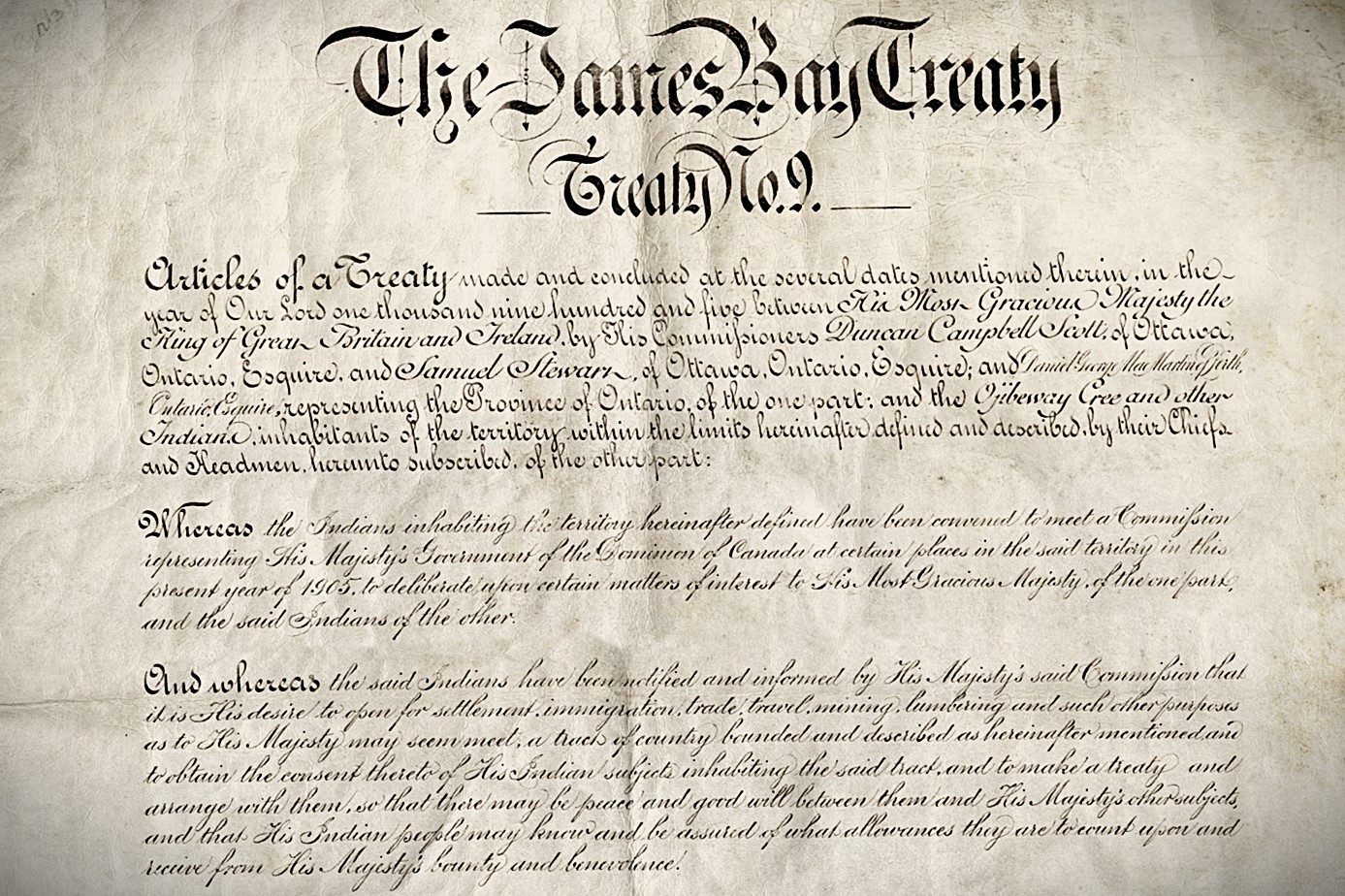
For Indigenous communities living in Ontario’s Northern Boreal Peatlands, the stakes associated with developing the so-called “Ring of Fire” could not be higher. According to long time observer and legal scholar, Dayna Scott, “the small, remote Anishinaabe and Anishini communities across the peatlands of Treaty No. 9 have been both dreading and inviting transformative changes to their lands, lifeways, and livelihoods.” (Scott, 2025:41) These communities, Scott, and other experts, warn face staggering, colonially-motivated physical infrastructure deficits, and near constant states of social emergency for which mining and extractive development are conveniently positioned as the only solution (Scott & Cowen, 2020; Scott, 2025).
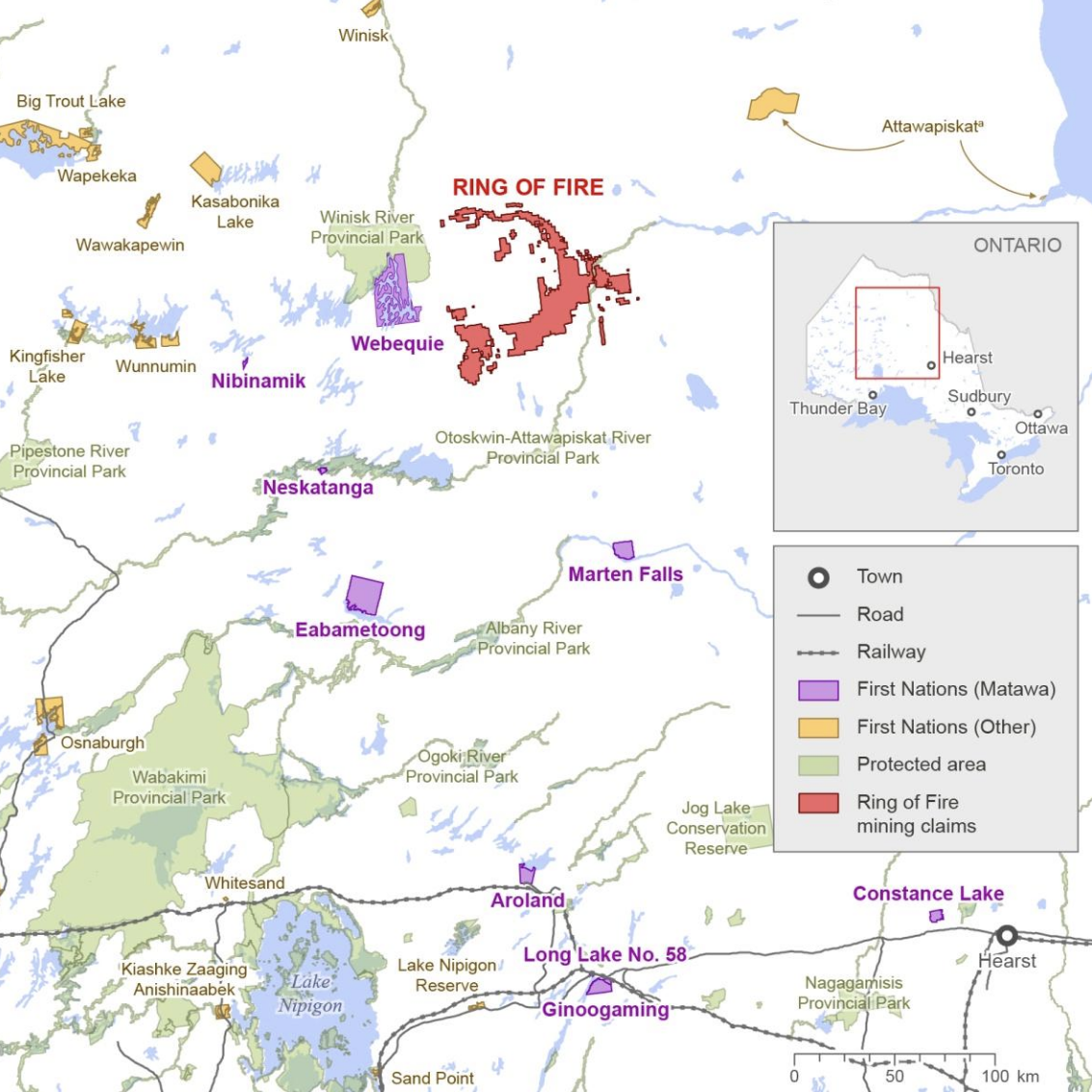
Northern Ontario’s Ring of Fire—which the provincial government envisions as a critical mineral rich extractive frontier, long overdue for development—is home to Cree, Anishini, and Anishinaabe peoples of Treaty No. 9, including the eight Mattawa Nations and five O’Mushkegowuk Nations most proximate to and downstream of the proposed development. These nations assert shared jurisdiction as well as Indigenous and treaty rights across the area. Notwithstanding qualified support from two First Nations, mining, mineral exploration, and infrastructure development, including an essential 350km mining road through the peatlands, continue to face significant opposition from Indigenous communities. This includes opposition to the pace and scale of development, which has vastly outpaced the capacity of the nations to meaningfully evaluate and respond, and to the provincial government’s attempts to unilaterally determine the future of Treaty No 9 territories.
Mineral exploration and proposed infrastructure development have been met with repeated court challenges, judicial reviews and regulatory appeals brought by local First Nations. Plans to develop the territory into a ‘special economic zone’ currently face constitutional legal challenges from Treaty 9 nations, as do Federal and provincial legislation, Bill C-5 One Canadian Economy Act and Bill 5 Protect Ontario by Unleashing our Economy Act respectively, aimed at fast tracking mining and infrastructure projects in the region. Communities have also issued cease and desist orders to exploration companies, established land defense encampments at key points along the proposed infrastructure corridor, and established land defense alliances together with other treaty nations to protect against unwanted development in the Ring of Fire.
Responding, perhaps, to this resurgence and renewed assertion of Indigenous rights and jurisdiction, the Ford government has reframed development of the Ring of Fire as “economic reconciliation” – an opportunistic mishmash of a concept that combines the promise of economic prosperity and extractive development with colonial reparations. The idea of economic reconciliation historicises colonially produced inequalities as problems of economic exclusion in which Indigenous peoples were prevented from sharing in the benefits of extractive development (Peres & Stanley, 2025:2; Sommerville, 2021). It frames financial and economic forms of participation in extractive development, such as equity stakes, as modes of colonial redress and positions the extractive development of Treaty 9 territory as a pathway towards decolonization (Peres & Stanley, 2025:2). In practical terms, the province imagines economic reconciliation through a set of processes that purport to extend economic benefits associated with mining to Indigenous people and communities. These purported benefits include government resources revenue sharing (GRRS), in which a portion of the mining tax collected by the province is shared with Indigenous communities; benefit agreements negotiated privately with industry that commit to a range of compensation measures including jobs and revenue sharing in exchange for access; and, Indigenous equity and ownership stakes in mining and related infrastructure projects, supported by low-interest borrowing schemes. More perniciously, economic reconciliation also includes “prosperity agreements” through which provincial resources for desperately needed life sustaining infrastructure are made available to communities willing to participate in extractive development (Government of Ontario, 2026); otherwise called “infrastructural violence” by some legal experts (Scott & Cowen, 2020).
Whether or not economic reconciliation, as imagined by the provincial government, represents a genuine attempt to respect Indigenous jurisdiction or meaningfully share resource wealth with Indigenous communities, Ontario’s vision for the Ring of Fire risks deepening colonial inequalities. Development of the Ring of Fire since the 2000s has and continues to depend on the use of fiscal and regulatory mechanisms designed to undermine Indigenous jurisdiction and circumvent Indigenous rights. Indeed, efforts to “de-risk” exploration and infrastructure development have revolved almost exclusively around the problem of Indigenous jurisdiction. Exploration of the Ring of Fire continues to be financed by tax relief, and recent federal and provincial legislation aimed at streamlining and fast-tracking regulatory approvals demonstrate how governments have sought to undermine Indigenous rights. Extractive development in the Ring of Fire is also poised to continue the largely uncompensated and mostly one-way flow of wealth out of Indigenous territory and away from Indigenous peoples and communities, demonstrated by corporate practices and investment relationships surrounding the Ring of Fire.1
Incentivizing Mining Against Indigenous Jurisdiction
As I have argued elsewhere, assertions of Indigenous jurisdiction, of which there is no shortage in the Ring of Fire region, amplify the highly speculative nature of mineral exploration, deterring even the most “risk tolerant” of investors (Stanley, 2024). Without financial and regulatory interventions that strip away Indigenous rights and jurisdiction, investment in the Ring of Fire would be non-existent. Mineral exploration, for instance, has depended on the considerable fiscal intervention of the “flow-through share” – a tax-based mechanism for raising money for exploration that has capitalized nearly all exploration of the Ring of Fire. In the simplest terms, flow-through shares transfer tax relief associated with exploration expenses from firms to investors so as to offset their exposure to “high risk” equity. In so doing, flow-through financings substitute tax relief for growth, thus protecting investor wealth from exposure to exploration equity and injecting liquidity in the form of individual private wealth into exploration. Fully funded, thanks to the government’s forfeiture of tax revenues, companies are emboldened to explore and develop prospects despite high levels of Indigenous opposition, and often without consent.
Table 1 – Juno Corp Flow-through Financings by Date Raised to Explore Indigenous Land, Treaty 9 Territory
The relationship between tax relief and access to Indigenous land in the Ring of Fire is best illustrated by example. Mineral exploration conducted by Juno Corp., an Ontario-based mineral exploration company, has been opposed by several First Nations, including Attawapiskat First Nation who took the company to court in 2021 for exploring without consulting. Table 1 summarizes the company’s flow-through transactions. Notwithstanding Indigenous opposition and negative publicity stemming from litigation, Juno has raised nearly $40 million from investors since 2020 by means of FTSs to advance exploration of its Ring of Fire properties. In 2025, for instance, Juno disclosed raising $14 million worth of “premium” FTSs – an arrangement where a back-end buyer, such as a company insider, has agreed in advance to purchase the shares from the initial flow-through investors. Investors who initially purchased the shares avoided nearly $7.5 million in income tax on the value of the purchase price. The same investors paid capital gains taxes of $2.77 million on the resale price of the shares when they sold to the back-end buyer at a discounted and pre-arranged price, thus avoiding an estimated $4.7 million in taxes overall. Investors were also able to use the federal Mineral Exploration Tax Credit (METC) to deduct up to 30% of the initial share purchase price, equivalent to an estimated $4.2 million, from any federal taxes owing. The METC is a non-refundable tax credit that contributes to the total taxes abandoned to incentivize investment in exploration. The METC was increased from 15% to 30% in the 2022 tax year for investments in critical mineral exploration. All told, once the loss on the price of shares was accounted for, investors collectively made up to $5 million in after-tax profit from this single transaction; the federal government abandoned nearly $9 million in taxes; Juno raised $14 million in discounted capital.
Table 2 – Tax Relief and Access to Indigenous Land in the Ring of Fire
Table 2 summarizes the impact FT financing has had on exploration of the Ring of Fire. Except for royalty agreements that financed approximately 30% of Noront’s exploration budget, exploration of Indigenous land in the Ring of Fire was capitalized almost exclusively by means of FTSs (Stanley, 2024). Exploration companies operating in the Ring of Fire have raised nearly $200 million worth of exploration capital using flow-through shares, with much of it raised in the last half decade’s critical mineral rush. These investments have netted up to an estimated $60 million in after-tax profits, while governments have forfeited nearly $100 million in tax revenues to guarantee them. Indigenous communities, most of whom did not consent to this exploration, did not share in these profits.
As I have noted elsewhere, FT financing is a fiscal policy “of land alienation and enrichment” that bolsters a regulatory system that is strategically ignorant of Indigenous jurisdiction and overseen by governments unwilling to uphold and protect Treaty rights (Stanley 2024). Projects that would otherwise be deemed too risky due to heightened Indigenous opposition, are capitalized, and exploration that lacks Indigenous consent or faces outright resistance proceeds nonetheless. Investors typically sell the shares as soon as possible, usually at a loss, and in some cases to a pre-arranged back-end buyer. Profit is derived almost exclusively from the tax-relief transferred to the investor. Ring of Fire exploration companies have also begun to access philanthropic capital using “charity” flow-through shares – a riff off the original mechanism, wherein an investor (donor) buys the shares and donates them to a charity which then sells them to a prearranged buyer at a discount. The tax-relief, including the Charitable Donation Tax Credit, dramatically lowers the cost of the investment, the charity receives cash and the exploration company raises even more capital.
Respect for Indigenous Rights is Discretionary
Flow through finance notwithstanding, gaps remain in which investment remains particularly sensitive to Indigenous resistance. This is particularly the case for mining projects as they transition from exploration to mining, and for infrastructure development (Merwat, 2026). Nowhere is this more evident than in the Ring of Fire, where the development of the only proposed mine has been stalled since 2011, and construction of a 350km mining access road has been delayed for nearly as long (Stanley, 2021). Recent regulatory interventions, most notably the federal Bill C-5 One Canadian Economy Act and provincial Bill 5 Protect Ontario by Unleashing Our Economy Act, aim to push these project approvals forward by curtailing assertions of Indigenous jurisdiction. Both pieces of legislation allow governments to exempt resource projects deemed of critical economic importance from independent regulatory oversights (including environmental and social impact assessments), pre-approve projects without consent or consultation, and instead, concentrate regulatory oversight to cabinet.
Many see these as a giant de-risking exercise with Indigenous jurisdiction clearly in the crosshairs. The One Canadian Economy Act downloads federal authority to the provinces, especially when it comes to Indigenous rights; a move which critics point out, “allow(s) the federal government to defer to provincial processes that do not share an equivalent mandate to safeguard Indigenous and Treaty rights or uphold nation-to-nation relationships” (Kenebeck First Nation in King, 2026). The Protect Ontario Act rolls back provincial environmental assessments and protections and allows governments to exempt projects from provincial laws and regulations (Denaro, 2025: 1). It pre-exempts Wyloo’s Eagle’s Nest Mine Project, the first and only proposed mine in the Ring of Fire, from environmental assessment. In addition to slashing regulatory oversight of the Ring of Fire, exempting the mine has eliminated processes that “trigger” the duty to consult Indigenous peoples, and excludes them from decisions affecting the future of Treaty 9 territory. Treaty 9 Nations appealed to the federal Minister of the Environment, Climate Change and Nature to designate the Eagle’s Nest Mine Project for review under current federal environmental assessment legislation—in February 2026 the Minister denied their request.
Ontario’s legislation, according to Yellowhead Institute Director Hayden King, “further obscures the process and requirements for consultation,” and outsources consultation to industry (2025). The provincial government has also fast-tracked all regulatory permitting and approval processes, including for mineral exploration, under the “One Project, One Process” framework, that strips away opportunities for Indigenous communities to be involved in determining the future of the Ring of Fire. In addition to undermining Indigenous rights and sidelining consultation, this regulatory reconfiguration also weakens the bargaining power of those who support development. Communities in the Ring of Fire who are currently engaging with mining and exploration companies have had the rug pulled out from under them and now have less power to extract concessions from companies and hold them to account.
The False Promise of Prosperity
Despite the prosperity promised to Treaty 9 Nations, development of the Ring of Fire is likely to continue the flow of resources away from Indigenous people and communities. Though they will disproportionately bear the social and ecological consequences of development, it is unlikely that wealth will trickle down to sustain their communities, or that projects will provide meaningful economic security. Ontario levies a 5% to 10 % tax on net profits for mining companies currently in operation above an annual $500,000 exemption, and after an initial development exemption of $5 million to $10 million, depending on whether the mine is designated a “remote” operation. First Nations, who have negotiated resource revenue sharing agreements with the Ontario government, share in 40% of the provincial tax revenue collected from mining in their territories. Revenues collected from newly developed mines, including any mines developed in the Ring of Fire, will be shared at 45%. The province also levies an 11.5% tax on the corporate income of mining companies, but this revenue is not shared with First Nations. Nor are any revenues from the 15% federal corporate income tax allocated to First Nations.
However, GRRS agreements share only a tiny fraction of mining wealth with First Nations. Ontario currently maintains revenue sharing agreements with 41 First Nations. Since these agreements were established in 2018, the Government of Ontario has disbursed approximately $100 million worth of resource revenues to First Nations (Ontario Ministry of Mines, 2025). For perspective, Table 3 provides financial information for the 2024 fiscal year for Ontario’s highest tax paying mining companies (defined as having paid CA $25 million or more in taxes and fees to the Ontario government during the five years between 2020 and 2025). In 2024, the most recent fiscal year for which there is complete data, these companies recorded annual sales revenues associated with their Ontario mining operations of US $5.38 billion. The CA $100 million (roughly US $ 73.2 million) shared under GRRS agreements over eight years, with 41 First Nations, represents slightly more than 1% of this annual revenue.
Table 3 – Financial Information for Ontario’s Highest Tax* Paying Companies, Attributable to Ontario Operations, FY 2024
So little mining wealth is shared with First Nations in Ontario because the provincial government collects only meagre tax revenues from mining companies who can use loopholes and avoidance strategies to minimize contributions. This is unlikely to change with Ring of Fire development. In addition to writing off almost all operating, production, maintenance and transportation costs, including labour and administrative overhead, against taxable mining profit, Ontario offers a generous suite of deductions and allowances for mining companies, including substantial processing and asset depreciations. Mining companies also have no shortage of (mostly legal) methods of minimizing taxes by sheltering profits in tax havens. Mining companies operating in Canada have been known to engage in “transfer pricing” to sell products at an artificially low price to an offshore subsidiary; to pay corporate subsidiaries inflated fees for technical or management services; or to use “offshore marketing hubs” to record profits in low or no-tax jurisdictions (Desnault 2016; Wilt 2018, 2019; Beauchesne 2020; Suarez 2021).2 Mining companies highlighted in Table 3 each own multiple corporate subsidiaries located in low or no-tax jurisdictions. Wyloo, though not currently facing allegations of tax minimization or avoidance, has at least one offshore subsidiary registered in the British Virgin Islands.3
Provincial-level data collected under the 2014 Extractive Sector Transparency Measures Act (ESTMA) shows that, between 2020 and 2025, Ontario collected a total CAD $527 million in taxes (including corporate and mining taxes), fees, penalties and other payments from mining companies. Mandatory corporate reporting under the ESTMA paints an even starker picture of how little mining profits are taxed. Table 3 compares 2024 sales revenues attributable to the Ontario mining operations of the eight companies with taxes paid to the Ontario government in the same fiscal year. Since ESTMA reporting does not disaggregate mining taxes from corporate taxes, it is not possible to determine what portion of these payments would be subject to 40% revenue sharing with First Nations. Despite recording substantial sales revenues, with some companies recording billions in sales revenue in 2024 alone, attributable to mining operations in Ontario, some companies paid little or no taxes. Glencore, an Anglo-Swiss company headquartered on the UK-dependency of Jersey off the coast of Great Britain for its favourable tax jurisdiction, paid just US $4.6 million in taxes on US $1.17 billion of sales revenue generated in Ontario; an effective tax rate of less than 0.5%. In total, the eight companies highlighted in Table 3 paid approximately US $90 million in taxes to Ontario on sales revenues of US $5.38 billion in 2024 – collectively, an effective tax rate of 1.6%.
ESTMA reports also reveal that private agreements between First Nations and mining companies return almost no wealth to communities. Impact and Benefit Agreements (IBAs, also referred to as “partnership agreements”) are one of the few ways that communities can extract concessions from mining companies. IBAs are confidential, contain what critics refer to as “gag-orders,” and, experts suggest, give companies and their shareholders an outsized role in defining Indigenous rights relative to extractive projects (Pasternak, 2020; Scott, 2020). Companies rarely disclose all financial information in their dealings with First Nations and often have the upper hand in negotiations with communities (Pasternak, 2020).
ESTMA reports, as confirmed by Table 3, also demonstrate that payments to First Nations associated with Ontario mining operations are marginal compared to sales revenues. Fees, which typically reflect payments to support community monitoring, participation in technical reviews, and stewardship programs, rather than wealth shared with First Nations, account for most of these payments. When royalties and bonus payments associated with permitting or production milestones are considered separately, payments to First Nations account for less than 0.5% of sales revenues. Only two of the eight companies paid royalties to First Nations in 2024, totaling US $21.6 million distributed amongst as many as 19 Indigenous “entities” according to ESTMA. Several companies either do not have active agreements with First Nations or did not make payments in 2024.
Wyloo, at the time of writing, is negotiating what it calls “partnership agreements” with Webequie First Nation and Marten Falls First Nation to provide “long term economic opportunities” (Wyloo, ND). Negotiations have been ongoing for more than three years, and there is no sign that these agreements will contain any form of revenue sharing arrangement. Andrew Forrest, Australian billionaire owner of Wyloo and its parent company Tattarang, has made unfavourable comments about revenue sharing with Indigenous peoples, describing revenue sharing agreements with Indigenous communities in Australia as “welfare” payments and linking revenue sharing to drug and alcohol dependency (Thompson 2023; Thompson & Kerr 2021). Journalists have documented the lengths taken by Forrest’s publicly traded mining company Fortescue (a subsidiary of Tattarang) to limit paying financial compensation to Indigenous peoples for mining operations in Australia (Cleary, 2021a; Cleary, 2014). According to Cleary, Fortescue’s financial success in Australia has depended in large part on low-cost access to Indigenous land (2021b).
While jobs, training, and entrepreneurial opportunities would undeniably be welcomed by Ring of Fire communities, experience from mining operations in other jurisdictions unfortunately suggests these benefits are likely to be limited and ephemeral.
It remains to be seen whether Wyloo will replicate these practices in the Ring of Fire. Immediately upon acquisition of Canadian exploration company Noront Resources Limited and its assets in the Ring of Fire, Wyloo took the company private and eliminated an equity ownership stake held by Marten Falls First Nation obtained as a condition for exploration with Noront. Wyloo states its intentions to “empower” Indigenous communities in the Ring of Fire, committing to provide Indigenous training and employment programs, to award $100 million worth of contract opportunities to Indigenous businesses and to “foster opportunities” for Indigenous businesses to participate in the economic development of the mine and region (Wyloo, 2024). The company has also publicly committed to help in providing Indigenous ventures with access to capital and have launched an “Indigenous Enterprises Business Development Opportunities Workshop” to help Indigenous businesses, “meaningfully participate in the economic benefits stemming from the Eagle’s Nest Project” (Wyloo, 2024).
Direct access to resource wealth does not appear to be on offer for Indigenous communities. Any sort of redistribution relative to Wyloo’s operations, it would appear, will be restricted to wage labour and entrepreneurial participation in the mining economy. While jobs, training, and entrepreneurial opportunities would undeniably be welcomed by Ring of Fire communities, experience from mining operations in other jurisdictions unfortunately suggests these benefits are likely to be limited and ephemeral.
Real Jobs?
Notwithstanding employment projections made by the Government of Ontario, who anticipate the creation of 70,000 jobs4 which presumably include the build-out of associated EV supply chains, it is not actually clear how many jobs will result from mining the Ring of Fire. Nationally, Indigenous people make up 5% of the mining workforce, and in Northern Ontario they make up nearly 15% of mining sector workers (Baruah & Mujanovic, 2023:1). What little data exists demonstrates that, although many Indigenous workers are employed in mining relative to other economic sectors, they overwhelmingly work in low-wage, temporary, and low-skill or unskilled positions (Baruah & Mujanovic, 2023:1). Furthermore, unemployment, income loss, and disinvestment associated with the boom-and-bust nature of the mining economy are especially acute for remote, Indigenous communities (Collard, et. al., 2024; Keeling & Sandlos, 2022; Rodon, et. al., 2022; Dallaire-Fortier, 2024; Inutiq, et. al., 2024). In Nunavut, for instance, resource extraction (including mining, oil and gas) employs relatively few Indigenous people compared to non-Indigenous people, and “economic multipliers,” or the additional economic activity and income as a function of the amount of investment, associated with the sector, are lower than investment in all other economic sectors across the territory (Oschinski, 2024).
According to Statistics Canada data, nationally, every $1 million invested in mining, oil, and gas industries generates 1.8 jobs (Lee & Card, 2012:39). More recent data demonstrates that for every $1 million invested in mining and exploration in Nunavut, only 2.9 jobs are created, and labour income is increased by only $300,000 (Oschinski, 2024). In contrast, for every $1 million invested in arts, sports, and heritage-related institutions in the territory, 25 jobs are generated with a $1 million increase of total labour income (Oschinski 2024). Another study in Northern Ontario further corroborates these low estimates for the economic multiplier on mining investment. According to the Northern Policy Institute, $1 million invested in mining in the Kenora district, where the Ring of Fire is situated, generates $311,000 of additional labour income, and every direct mining job induces an additional 0.61 positions (Moazzami, 2019:18, 20).
It is hard to see these low economic multipliers align with the provincial government’s employment projections for the Ring of Fire. While employment multipliers are low, those associated with job losses are not. Longitudinal analysis of mining employment trends in Canada suggests that for every job lost in a mining dependent economy – for instance, when mines are exhausted or become unprofitable – close to 10 more jobs are lost (Dallaire-Fortier, 2024:7). Building prosperity on the boom-and-bust cycles of commodities is unsustainable for an already precarious economy in Northern Ontario. Experience from Nunavut also demonstrates the tendency of jobs, services, and contracts associated with mining to flow out of the territory. Mining and exploration strongly favour non-Inuit workers, Inuit employment in mining and exploration is overwhelmingly unskilled and temporary, and most related service contracts go to southern, non‐Inuit organizations (Bernauer, 2019b). Finally, industry and government forecasts tend to ignore that temporary mine closures, due to changing market conditions and commodity price fluctuations, periodically induce widespread layoffs and suspend benefit payments to communities (Collard, et. al., 2024). Reality demonstrates that governments often overestimate job creation in the mining sector. A 2024 analysis of the economic performance of 27 British Columbia mining projects, for instance, found that for every 100 jobs promised by industry, 12 materialized (Collard, et. al., 2024).
Paying for Access to Mining Wealth with Debt
The Government of Ontario states that it will “ensure First Nations are full partners in the economic development of the Ring of Fire” (2026). To do so, it has increased loan guarantee programs encouraging Indigenous “partners” to debt finance ownership and equity stakes in mining and infrastructure projects. Ontario’s Indigenous Opportunities Financing Program, for instance, aims to help Indigenous partners purchase equity in “eligible energy and resource development projects” by providing loan guarantees to lower the cost of borrowing. Indigenous partners, presumably communities or business ventures, can borrow from the private sector at below market interest rates to secure a financial stake in proposed mining and infrastructure projects. Similar initiatives exist at the federal level, including through the $10 billion Indigenous Loan Guarantee Program, and the Canada Infrastructure Bank’s (CIB) Indigenous Community and Indigenous Equity Initiatives, supporting equity stakes in mining-related infrastructure projects.
The ability to pay off debt, generate a return, and avoid insolvency, will in turn be dependent on the speed and success of the mining economy to which Indigenous partners would be increasingly beholden.
It is hard to see this as anything other than an attempt to “de-risk” development by offloading liabilities onto Indigenous communities and indebting them to the resource economy. To be clear, First Nations are being asked to debt finance access to mining wealth extracted from their own land. Federal and provincial loan guarantee programs protect creditors, not First Nations who will be on the hook to repay the loan if projects prove unprofitable or fail; and the consequences for defaulting if they are unable to repay are unclear. Loans will be contingent on terms set by private financial institutions, including terms for repayment. CIB loans to Indigenous entities, for instance, are recovered via a “cash sweep” arrangement that automatically redirects project revenues, and the loans are secured against other sources of community income (Canada Infrastructure Bank, 2021; 2023). To invest, Indigenous partners are required to commit 10% to 20% of their own capital, depending on the CIB initiative, which can be borrowed from the private sector at commercial rates, or be sourced from existing community funds. Until the loans are repaid, revenue generated by mining projects or related ventures and infrastructure like roads, airstrips, or worker services would flow first to creditors to service debt. The ability to pay off debt, generate a return, and avoid insolvency, will in turn be dependent on the speed and success of the mining economy to which Indigenous partners would be increasingly beholden.
Ring of Fire Development is Not for Indigenous Prosperity
Who will benefit from opening the Ring of Fire to mining? Exploration is primarily undertaken by cash strapped juniors who generate income by selling or optioning exploration properties to other investors. These private exchanges of value typically generate no wealth for First Nations, unless they are made to own equity in the company. In the meantime, mineral exploration employs very few people and generates very little wealth, except for investors in flow-through shares who profit from the organized abandonment of tax revenues that subsidize exploration. Most Ring of Fire exploration is conducted without agreements with First Nations. Of those mineral exploration companies that do maintain agreements, such as Juno, Ongold, and Metalex, only one agreement includes an equity stake with a First Nation, donated by the company, currently worth $150,000. No existing agreements include cash payments to communities.
Profits from mining operations that are projected to begin in the next ten to fifteen years, are also unlikely to accrue to First Nations. Mining companies consistently distribute more resource wealth to shareholders in annual dividends than to First Nations. In 2024, Canadian mining company Agnico Eagle operating elsewhere in Ontario distributed 17 times more wealth to shareholders in 2024 than to First Nations (Table 3). Royalty rights-holding companies and their shareholders also have a considerable claim on the profits that may flow from the Ring of Fire. Franco-Nevada, one of the world’s largest royalty companies, owns the rights to between 0.5% and 2% of net smelter return royalties on revenue generated from mineral extraction on each of Wyloo’s Ring of Fire assets, including a 2% net smelter royalty on the Eagle’s Nest Mine. Unlike taxes, royalties are paid “net of smelter” and thus likely represent a larger share of revenue than the 0% to 2% rate at which companies pay tax, and the 0% to 0.5% rate at which they share mining wealth with Indigenous communities. Franco-Nevada also paid out $230 million in dividends to shareholders in 2024, $62 million of which accrued to Canadian investors including public sector pension funds, banks, and insurance companies.
Despite its framing as an exercise in so-called “economic reconciliation,” development of the Ring of Fire offers only another form of colonialism. Corporate access to the Ring of Fire requires government fiscal and regulatory interventions designed to undermine Indigenous jurisdiction and restrict the ability of Treaty 9 Nations to shape the future of their territory. Notwithstanding the possibility of a few jobs or entrepreneurial opportunities in the mining economy, evidence overwhelmingly suggests an extractive future for Treaty 9 territory will continue the flow of wealth out of Indigenous land, and away from Indigenous people and communities.
Notes
- Were there space, this list of reasons would include the horrifying way extraction in the ring of fire has been primed by decades of what Scott (2025:41) refers to as the “passive, but chronic, denial of basic community infrastructures to support life on reserve, such as safe drinking water and adequate housing.” ↩︎
- Barrick Gold for instance has faced allegations over the stark disparity between taxes paid in Canada and overseas. Cameco used transfer pricing arrangements to avoid 2 billion dollars in taxes. ↩︎
- As of December 2025, verified on Eikon. ↩︎
- See Government of Ontario (2026). It is unclear how the Ontario government arrives at this figure. ↩︎
References
Baruah. B., & S. Biskupski-Mujanovic. (2023). Indigenous women’s employment in natural resource industries in Canada: Patterns, barriers and opportunities. Women’s Studies International Forum. 99:1-11.
Beauchesne, E. (2020). Court loss shows Canada should reform corporate tax rules. July 27. Canadians for Tax Fairness. Available online.
Bernauer, W. (2019). The limits to extraction: Mining and colonialism in Nunavut. Canadian Journal of Development Studies. 40(3): 404–422.
Canada Infrastructure Bank. (2021). Canada Infrastructure Bank Indigenous Community Infrastructure Initiative guide. Available online.
Canada Infrastructure Bank. (2023). Indigenous Equity Initiative overview. Available online.
Cleary, P. (2014).Native Title Contestation in Western Australia’s Pilbara Region. International Journal for Crime Justice and Social Democracy. 3(3): 132‐148
Cleary, P. (2021a). Title Fight: How the Yindjibarndi Battled and Defeated a Mining Giant. Schwartz Books.
Cleary, P. (2021b). The Fortescue Way. The Monthly. 27 September, 2021. Available online.
Collard, R., J. Dempsey, Y. Al Bouchi & N. Bawaan (2024). Does regulation delay mines? A timeline and economic benefit audit of British Columbia mines. FACETS doi.org/10.1139/facets-2024-0083
Dallaire-Fortier, C. (2024). Unemployment ripple: The impact of mine closures in Canada, 1987 to 2020. Resources Policy. 92: 1-17
Denaro, N. (2025). Let’s call bill C-5 What it is—A power grab. Canadian Centre for Policy Alternatives. Available online.
Desnault, A. (2016). Legalizing Theft: A short guide to tax havens. Fernwood, Canada.
Government of Ontario. March 2, 2026. Ontario Releases Accelerated Plan to Complete Construction on Roads to the Ring of Fire Five Years Ahead of Schedule. Available online.
Inutiq, K., Fox, S., & King, H. (2024). (Eds.), Pinasunniq: Reflections on a northern Indigenous economy. The Yellowhead Institute.
Keeling A., & J. Sandlos (2017). ‘Ghost towns and zombie mines: the historical dimensions of mine abandonment, reclamation, and redevelopment in the Canadian north.’In S. Bocking & B. Martin (eds). Ice blink: navigating northern environmental history. University of Calgary Press.
King, H. (2025). The elbows are up: Ontario’s “Special Economic Zones” and Indigenous rights. The Yellowhead Institute. June 5, 2025. Available online.
King, H. (2026). The new impact assessment regime: Cooperation agreements, the return of provincial power and discretionary Indigenous rights. March 17, 2026. The Yellowhead Institute. Available online.
Lee, M., & A. Card. (2012). A Green Industrial Revolution, Climate Justice, Green Jobs and Sustainable Production in Canada. Canadian Centre for Policy Alternatives. Pp. 1-63.
Merwat, S. (2026). Mine & Refine: Bridging Canada’s Critical Minerals Capital Gap. RBC Energy Reports. Available online.
Ministry of Mines, Ontario. (2025). Published plans and annual reports 2024–2025: Ministry of Mines. Available online.
Moazzami, B. (2019). Income and Employment Multipliers for 20 Industries in 11 Census Divisions in Northern Ontario. Northern Policy Research Institute Research Paper No. 28. pp 1-23.
Oschinski, M. (2024). The current state of the northern economy for Inuit in Nunavut. In K. Inutiq, S. Fox, & H. King (Eds.), Pinasunniq: Reflections on a northern Indigenous economy (pp. 18‐36). The Yellowhead Institute.
Pasternak, S. (2020). “Wet’suwet’en: Why are Indigenous rights being defined by an energy corporation?” Yellowhead Institute. Available online.
Peres, M., & A. Stanley. (2025). “A true story of national reconciliation”: The Grays Bay Road and Port, Kivalliq Hydro‐Fibre Link, and Inuit jurisdiction. Canadian Geographies. 69:1-15.
Rodon T., A. Keeling & J. Boutet (2022). Schefferville revisited: the rise and fall (and rise again) of iron mining in Québec-Labrador. The Extractive Industries and Society, 12.
Scott, D., & D. Cowen (2020, Nov 22). Mining push continues despite water crisis in Neskantaga First Nation and Ontario’s Ring of Fire. The Conversation Canada. Available online.
Scott, D. (2020). Extraction Contracting: The Struggle for Control of Indigenous Lands. South Atlantic Quarterly (2020) 119 (2): 269–299.
Scott, D. (2025). Infrastructural (Dis)Entitlement: Tactics of Dispossession on the Critical Minerals Frontier. Journal of Law and Political Economy 5(1):39-73.
Sommerville, M. (2021). Naturalising finance, financializing Natives: Indigeneity, race, and “responsible” agricultural investment in Canada. Antipode, 53(3):643-664
Stanley, A. (2021). “Will Debt, Liability and Indigenous Action See the Sun Set on the Ring of Fire?” The Conversation, November 1, 2021. Available online.
Stanley, A. 2024. Making ‘Settler Time’: How mineral exploration finance circumscribes Indigenous resistance. Studies in Political Economy. 105(2)
Suarez, S. (2021). Key takeaways of Supreme court’s termination of Cameco transfer pricing saga. February 26, 2021. Blog. Bordner Ladner Gervais. Available online.
Thompson, B. 2023. Fortescue founder claims signing Yindjibarndi royalty agreement risks creating ‘alcohol disasters’. Australian Broadcast News. Feb 15, 2023. Available online.
Thompson, B. & P. Kerr. (2021). Forrest links mining royalties to Indigenous misery. The Australian Financial Review. September 1, 2021. Available online.
Wilt, J. (2018). Canada’s mining giants pay billions less in Canada than abroad. July 16, 2018. The Narwhal. Available online.
Wilt, J. (2019) Internal Memo at Natural Resources Canada responds to the Narwhal’s reporting on low mining taxes and royalties. April 8, 2019. The Narwhal. Available online.
Wyloo. (Nd). Eagles’ Nest, People. Available online.