
Introduction
There’s a mythology baked into the New Democratic Party across Canada, that if we knock on enough doors, make enough phone calls, talk to enough people face-to-face, that maybe this time we will win. It is a story that was repeated on stage at the federal party’s 2026 Winnipeg Convention where nearly every speaker and leadership candidate pledged their allegiance to “showing up” and “knocking on more doors,” when posed with the question of how to rebuild the federal NDP. During the 2025 federal election, I campaigned as an NDP candidate for Saskatoon West, and longtime local organizers recounted stories of the “poll captain” model that assigned one volunteer to each poll, responsible for overseeing the contact of around one thousand voters. Expressing the core of this mythology, poll captains show up on doorsteps several times around and during the election period, developing one-on-one relationships with every voter so that they can tailor their get-out-the-vote (GOTV) activities on election day around who needs a ride, who voted early, and who will need a reminder (or two).
The NDP’s ubiquitous “ground game,” a campaign strategy as much as it is an NDP lifestyle, fuels the moral centre of the party’s election activities. It foregrounds the grassroots spirit of the party alongside the valued connection that comes from talking to someone on their doorstep, especially when paired with the increasing rarity of genuine face-to-face exchange in the online, digitally-driven 21st century. But there is a disconnect between the dominating force of the strategy and consecutive electoral losses; while canvassing can confirm voter sentiments, it cannot generate the momentum that moves people to act. Today, as voters encounter dozens of messages daily, and attention is scarce currency, the NDP needs more than poll captains and canvassers. It needs a coherent and courageous message that moves people to action long before anyone reaches a door.
The Mythology of the NDP Ground Game
“If there’s one thing the NDP knows it’s resilience, it may not win elections, but it’s something to hold on to when the spotlight fades.” — Kylie Stanton, Global News
I remember feeling sucker-punched as I heard this news report the day after the election (Stanton, 29 April 2025). I thought about unsuccessful candidates across the country, all of us holding on to our resilience like a badge of honour, while witnessing the NDP’s greatest loss in the lifetime of the party.
Months earlier, I participated in monthly virtual meetings for federal NDP candidates in preparation for the next election. Blake Desjarlais, then MP for Edmonton-Griesbach, joined one of the sessions and opened his remarks with a variation on the familiar line: “The NDP might have less money in the bank, less political capital and fewer ads crowding the airwaves, but we have the best ground game around!” The virtual participants cheered, sending reaction hearts and thumbs up as Desjarlais continued with a story about a conversation he had with Liberal Party MP who could not remember the last time he knocked on a door. Desjarlais’ story landed exactly as intended, and candidates felt inspired to take to the streets with the famed NDP “resilience,” committed to working harder than candidates of any other party. During the 2025 election, Desjarlais and his team ran one of the strongest ground games around, topping all of the internal charts that tracked campaign contacts and strengthening Desjarlais’ profile as a respected community-leader among voters in Edmonton Griesbach. But like so many other campaigns across the country, Desjarlais lost by thousands of votes on election night, a valiant local campaign unsupported by a clear offer from the national party.
Without a sufficient air game (and more importantly, its delivery of a campaign offer), it is difficult to see how a continued overreliance on the ground game will lead to electoral success.
Political scientists have measured the gaps between ground game strategies and election outcomes. While in municipal elections or byelections, GOTV tactics can lift turnout anywhere from 4 to 10 percentage points, (Green & Gerber, 2019) researchers Christopher Mann and Katherine Haenschen found that in high-stakes races and major national elections, the same tactics can lose 33% to 76% of their effectiveness, producing minimal gains despite similar effort. (Mann & Haenschen, 2024) Another study, which examined 49 field experiments, found that while canvassing works for GOTV, it has virtually no persuasive power in general elections. (Kalla & Broockman, 2018) In low-turnout elections, or among new or disengaged voters, canvassing can be much more effective, but in high-stakes and highly polarized contexts (which is increasingly the political norm), canvassing can help to identify voters, but it rarely wins new ones. (Kalla & Broockman, 2018; Mann & Haenschen, 2024)
The 2025 federal election placed the NDP in exactly this scenario. Voters were receiving dozens of messages daily across multiple channels and a single conversation on a doorstep cannot compete with the cumulative weight of information voters consume: digital advertising, influencer videos, algorithmic news feeds, and partisan media, and AI-generated content. A decade ago, Canadian voters were informed by more local journalism, less time on social media platforms, and less international interference. In today’s information economy, “every single aspect of human life across the broadest categories of human organization is being reoriented around the pursuit of attention,” (Hayes, 2025) and yet, much of the NDP’s campaign research, tactics, and strategy is still built on the technological and information landscape of the 2010s. Whether we like the information economy or not, the party has not kept pace.
The NDP is not alone in its evangelism of the ground game. The longtime conservative strategist, Jenni Byrne, is described as someone who “lives and breathes the ground game” (Lewsen, 31 March 2025). But Byrne takes a different approach, preferring to use sentiments on doorsteps as a bell-weather for message crafting and policy direction in conservative campaigns. Aside from vote intentions, conservative tactics ask voters being canvassed how they feel about public safety, the economy, or “what keeps them up at night.” This focus on taking the temperature of the party base enables conservative campaigns to reflect those grievances back in a way that makes their primary supporters feel heard. This model builds an information feedback loop wherein the door informs the data, the data shapes the message, and the message is amplified across every channel. Unsurprisingly, Pierre Poilievre’s messaging machine was very effective leading up to the 2025 election.
While all three federal parties spent similar amounts during the 2025 election period on digital and video advertising, in the year leading up to the election, the Conservative Party of Canada spent more than $16.5 million on advertising, compared to $2.3 million spent by the Liberal Party of Canada, and only $298,000 spent by the NDP.1 Canadians across the country were familiar with Conservative messaging points that called for cutting taxes and reflected feelings of insecurity. By the time a canvasser reached a door, the CPC message was already delivered several times over through digital and media channels, a strategy so effective, it likely induced the newly established Carney government to remove the federal “carbon tax” immediately before calling an election, despite the undertaking of the previous Trudeau government to establish carbon pricing as a landmark climate policy.
Like the Conservative Party, the Liberal Party of Canada can afford to balance the ground game with a strong “air game” of media and digital advertisements. The LPC invested in integrated databases, tested messaging, research, and digital infrastructure that also ensured that the data, strategy, and communications fed into one another. The LPC message of “Elbows Up” had propagated through dozens of other channels, using the attention of the LPC leadership race and the moment of inauguration of the second US Trump Administration, before the ground campaign emerged. The distinguishing feature is not that these strategies have moved beyond the value of face-to-face contact, but rather that the ground game is treated as part of a larger strategy that includes clear offers and consistent messaging. While the interconnected approach of air game and ground game is generally understood by NDP strategists, digital advertising, social media, and technology costs are consistently the first campaign budgets to face cuts. Without a sufficient air game (and more importantly, its delivery of a campaign offer), it is difficult to see how a continued overreliance on the ground game will lead to electoral success.
The Siren Call of the Air Game and the Power of a Message
In Canada, every social movement, commercial brand, political ideology, public policy, electoral candidate, or product, competes for the attention of citizens, consumers, and voters in the 21st century. Hayes argues that attention is different from information: while information is infinite, able to be in multiple places at once, attention is scarce, and its value lies in that scarcity (2025). To grab attention is to “command fortunes, win elections, and topple regimes,” a reality that all political parties understand, but which can come into conflict with the ethos of many New Democrats. In the age of attention, it’s not enough to reach people; we have to be able to move them.
Zohran Mamdani, the Mayor of New York City, and his team understood this perfectly during the campaign for the Democratic Primary and the 2025 Mayoral Election. While the field operation organized by the NYC Democratic Socialists of America was meticulous, relying on a new style of big organizing that focused on person-to-person engagement, it was the Mamdani campaign’s air game that made him into a movement. Mamdani began his mayoral campaign as a lesser-known member of the New York State Assembly. Some of his earliest campaign social media videos in late 2024 included asking strangers on the street why they had voted for Donald Trump in the US Presidential election. As the campaign for the Democratic nomination continued, his social media presence expanded to relentless waves of video content documenting rallies, providing position statements, and trolling his opponents. The creative videos were visually engaging and often humorous as they covered policy issues, New York history, and invited everyday citizens to join their canvassing efforts.
As Mamdani’s mayoral campaign for New York City demonstrated clearly, a courageous and hopeful message, delivered clearly and effectively, can move the entire conversation. That is when the pairing of the message and the ground game can become a groundswell.
Among the most compelling of the Mamdani campaign videos in the lead up to the November 2025 election included a short series entitled ‘Until It’s Done.’ In them, Mamdani sat at a rounded desk, set in different corners of the city, telling the stories of New Yorkers who were instrumental in its progressive history. These included Sylvia Rivera, a trans activist who had been central to the 1969 Stonewall Riots, and Fania Mindell who helped found America’s first U.S. birth control clinic in the very early 20th century, among others. On the night of the election, Mamdani released the fifth installment, filmed only in black and white, telling the story of Vito Marcantonio, an “unapologetic socialist” who championed Puerto Rican independence, immigrant rights, and the labour conditions of domestic workers. By consistently addressing issues that are at the centre of political debates (trans rights, reproductive rights, racism, immigration), Mamdani rooted himself in New York’s long history of courageous leaders, showing voters that social progress is a long game worth fighting for, especially in the face of present-day backlash against underrepresented groups.
By election day, the NYC-DSA mobilized over 100,000 volunteers, knocking on 3 million doors as part of the Mamdani’s field campaign (Uetricht, 22 December 2025). Thanks to a clearly communicated platform, every one of those doors opened to voters who already understood who Mamdani was and what he was fighting for. The New York Mayoral Race resonated across North America, with a strong following in Canada as progressives across parties felt like they were part of the campaign’s groundswell. Mamdani’s offer for “A New Era for New York City,” where they could “Afford to Live. Afford to Dream,” (Zohranfornyc.com) became a compass for New Democratic Party members at provincial and federal levels who have increasingly felt left out of political platforms and movements (Keenan, 2025).
Canada has had flashes of this kind of progressive momentum. Jagmeet Singh was one of the first Canadian politicians to leverage TikTok as a political space, using it effectively in the lead-up to the 2019 and 2021 federal elections. Alberta NDP MLA Janis Irwin, as Official Opposition Critic for Housing, has also leveraged social media as an outspoken advocate for 2SLGBTQ+ rights, developing a large and active following. Irwin is a fierce proponent of the NDP ground game, but it is her combination of courageous and clear messaging that builds her momentum.
This is not to say that parties should forgo their ground game for air game, nor that the ability to expend a “coherent message” is merely equated with advertising dollars. Research demonstrates that most political ads, whether on TV or social media, have minimal measurable effect on turnout (Unan et al., 2024) and the CPC under Pierre Poilievre’s leadership did not win the 2025 federal election despite outspending all other parties on advertising. The real power of an air game lies in its ability to shape the emotional terrain of a campaign, well before voters reach the ballot box. As Mamdani’s mayoral campaign for New York City demonstrated clearly, a courageous and hopeful message, delivered clearly and effectively, can move the entire conversation. That is when the pairing of the message and the ground game can become a groundswell.
From Ground Game to Groundswell
A campaign groundswell gives voters a reason to do more than just vote; the excitement activates them to tell their neighbours about a candidate, to show up to volunteer, to post messages online persuading their own communities to join in. Political momentum such as this comes from having something to offer before we even show up at the door. Criticism of the NDP’s muted messaging and absence-of vision during the 2025 election could also be found in the disastrous 2015 election when then-Leader of the Opposition Tom Mulcair led the party from frontrunner to electoral collapse. The party’s 2015 post-election review concluded that the campaign had been “out of sync with Canadians” and had failed to present a strong national narrative (New Democratic Party of Canada, 2016). Cautious repositioning in pursuit of an elusive ‘middle’ had left voters with no clear sense of what an NDP government would actually stand for (McGrane, 2019), and this is a reflex that has also since been reflected in provincial NDP wings who try to campaign or govern from the centre, only to lose to centrist and right-wing parties.
A decade later, the diagnosis is the same. The NDP’s Review and Renewal report (2025) drew on feedback from over sixty interviews and 30 group discussions with current and former MPs, candidates, staffers, and party members, as well as 3,500 survey responses and 500 written submissions. While the strategic plan for the 2025 federal election had been to run a “digital-first” campaign, staff confirmed that was, “never clearly defined or effectively implemented.” As it rolled out, the slogan of “fighting for you” was recycled from earlier campaigns, while a few leader-driven election videos made relatively neutral points about party promises. The report further notes that messaging arrived far too late, that the NDP “did not effectively counter” the dominant campaign frame, and that the party “failed to articulate its own theory of change.”
There is a certain irony in the report’s findings that an, “overwhelming majority of candidates, local campaign managers and volunteers would like to see the Party invest more in the ground game and less in certain aspects of the central campaign such as paid television advertising” (NDP, 2025). The tenacious NDP instinct is precisely what the report’s broader findings call into question: canvassing without a message is not enough to build a movement.
NDP campaigns are beginning to understand this. The 2023 Manitoba campaign, with the MB NDP led by party leader Wab Kinew, featured a relentlessly buoyant Kinew in the debates leading up to the election. His message discipline was strong, stating confidently “we’re going to fix our province’s healthcare system.” As Premier, he has continued taking big swings at political issues and is regularly lauded for saying what others are afraid to say and for taking positions that cut across partisan lines. Kinew’s follow-up to Avi Lewis’s win in the federal NDP leadership race took a declarative and positive stance that contrasted starkly with NDP opposition leaders Naheed Nenshi in Alberta and Carla Beck in Saskatchewan, when he stated, “we don’t have to agree on everything in order to do the big things together” (Scott 2026). Kinew’s widespread popularity is a testament to the refreshing impact of clear positions and bold policies within an often risk-averse progressive landscape.
Avi Lewis’ 2026 NDP federal leadership campaign also offers a relevant model. The campaign relied on big organizing and a digital-forward strategy that named the membership as a movement, rather than a series of votes. Building on successes from the Mamdani playbook, including using similar tech platforms for deep organizing (Sifry, 2025), Lewis’ campaign used online content and in-person events to generate volunteers, inviting those volunteers to build their own networks, and then met voters, volunteers, and bystanders with the tools that they needed to carry a clear message forward and build momentum. Furthermore, throughout the campaign Lewis clearly named the specific things he would fight for, such as a public option for groceries, a wealth tax on the ultra-rich, and a Green New Deal.
In the months since the election of Lewis as leader of the federal NDP, he and his team have continued this momentum through changes in party leadership at multiple levels. Savhanna Wilson, former executive director of the Toronto Alliance to End Homelessness and campaign manager for Lewis’s leadership campaign, has been appointed as chief of staff (“NDP Leader Avi Lewis Announces Details of Senior Team”) and Matthew Green, former MP for Hamilton Centre has been appointed as interim national director in place of outgoing longtime national director Lucy Watson (“NDP Announces Appointment of Matthew Green as Interim National Director”). Other proposed changes include updating the party’s tech and organizational infrastructure to better serve outreach and engagement (Avi Lewis Campaign, 2026), making it clear that Lewis is looking to mobilize grassroots supporters alongside a bold communications and messaging platform.
The Courage to Lead
This is not a call for an end to the NDP’s ground game, a winning campaign requires air and ground and everything in between. This is a call for courage and clarity. In 2025 NDP votes hemorrhaged to the Liberal Party, not because these voters experienced a drastic shift in loyalty, nor even because they will now forever vote for the Liberal Party. Alongside tense geopolitical pressures, the LPC pulled NDP voters because they had a plan and they were able to communicate it.2 Meanwhile the NDP collapsed in on itself with a lack of coherent strategy that not only disappointed its own base but excluded would-be supporters by failing to respond to the issues that mattered to them in ways that inspire and engage them. This failure extends to a much larger, and more important conversation about would-be supporters who are young, queer, trans, Indigenous, black, or brown, people who are unhoused, living in poverty, or unable to vote in the first place. These are the communities whose political interests align most closely with NDP values, but who research consistently shows are underserved by the electoral system (Ie, et. al., 2023; Everitt, et. al., 2025) and unmotivated by leaders who lack the courage to name the systemic and structural barriers that they face.
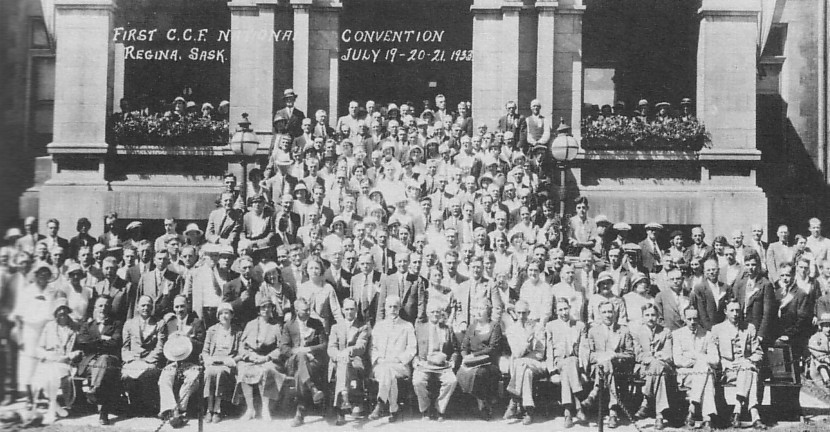
It doesn’t help to tell them about NDP leaders of the past or to knock on their ever-changing doors, because new voters are not drawn into the NDP by nostalgia, learning about Tommy Douglas and the CCF, or through a pamphlet handed to them on a doorstep. They are drawn in because they long to be part of something they can believe in, something hopeful in the face of the heaviness and confusion that surrounds them, something that reflects their struggles and offers a path forward. Future NDP supporters are looking for an invitation to stand up for community-based housing, for Indigenous sovereignty, for free local transportation, or for their grandchildren to grow up in a country with fresh air and water. These are the invitations that move people and as the NDP sets out to rebuild, it will need to start clarifying what it offers. It will need to start trusting voters with bold ideas and concrete commitments that both reflect the barriers they face and which chart a path forward to a world where those barriers are gone. The NDP cannot be satisfied with its own resilience in the face of defeat; it must be fearless in its pursuit of a future worth believing in.
Notes
- All results sourced from official audited statements from each party via Elections Canada. Note that I have only included expenses listed directly under “Advertising” for each party. Accessed online. ↩︎
- Angus Reid’s report from May of 2025 showed that of those who voted for the NDP in 2021, 19% switched their vote to the Liberals in 2025. Available online. ↩︎
References
Avi Lewis Campaign. 2026. A Political Instrument of the People. Available online.
Broockman, David E., and Joshua L. Kalla. 2016. “Durably Reducing Transphobia: A Field Experiment on Door-to-Door Canvassing.” Science 352, no. 6282: 220–24. doi.org/10.1126/science.aad9713
Everitt, Joanna, Ie, Kenny W., Bird, Karen, Wagner, Angelia, and Mireille Lalancette. 2025. Examining the Effects of 2SLGBTQI+ Candidates on 2SLGBTQI+ Voter Turnout in Canada. Polit Res Q. 78 (4):1273-1285. doi: 10.1177/10659129251355606 PMID: 41103809; PMCID: PMC12527295
Green, Donald P. and Alan S. Gerber. 2019. Get Out the Vote: How to Increase Voter Turnout. 5th ed. Washington, DC: Brookings Institution Press.
Hayes, Chris. 2025. The Sirens’ Call: How Attention Became the World’s Most Endangered Resource. New York: Penguin Press.
Ie., Kenny W., Everitt, Joanna, Bird, Karen, Wagner, Angelia, and Mireille Lalancette. 2023. Candidate Diversity and Racialized and Indigenous Political Engagement in Canada. Report prepared for Elections Canada. Available online.
Kalla, Joshua L., and David E. Broockman. 2018. “The Minimal Persuasive Effects of Campaign Contact in General Elections: Evidence from 49 Field Experiments.” American Political Science Review 112, no. 1: 148–66. doi.org/10.1017/S0003055417000363
Kalla, Joshua L., and David E. Broockman. 2020. “Reducing Exclusionary Attitudes through Interpersonal Conversation: Evidence from Three Field Experiments.” American Political Science Review 114, no. 2: 410–25. doi.org/10.1017/S0003055419000923
Keenan, Edward. 2025.“Zohran Mamdani has Advice for Progressives Everywhere. Is Olivia Chow Listening?.” Toronto Star, November 2025. Available online.
Lewsen, Simon. 2025. “Jenni Byrne’s Big Gamble.” Maclean’s, May 2025. Available online.
Mann, Christopher B., and Katherine Haenschen. 2024. “A Meta-Analysis of Voter Mobilization Tactics by Electoral Salience.” Electoral Studies 87. doi.org/10.1016/j.electstud.2023.102752
McGrane, David. 2019. The New NDP: Moderation, Modernization, and Political Marketing. Vancouver: UBC Press.
New Democratic Party of Canada. 2015. Campaign 2015 Review: Working Group Report. Ottawa: NDP. Available online.
New Democratic Party of Canada. 2025. Review and Renewal Report: Campaign 2025. Ottawa: NDP. Available online.
New Democratic Party of Canada. 2026. “NDP Leader Avi Lewis Announces Details of Senior Team.” NDP Newsroom, March 30, 2026. Available online.
New Democratic Party of Canada. 2026. “NDP Announces Appointment of Matthew Green as Interim National Director.” NDP Newsroom, May 21, 2026. Available online.
Scott, Lauren. 2026. “New Federal NDP Leader Avi Lewis will be a ‘Great Voice for the Country’: Wab Kinew.” CBC News, March 2026. Available online.
Sifry, Micah. 2025. “Solidarity Tech: The Platform Powering Zohran Mamdani’s Movement.” The Connector. Substack. November 4, 2025. Available online.
Soroka, Stuart. 2026. “Everything Everywhere All at Once: How Zohran Mamdani Campaigned Both Online and with a Ground Game.” The Conversation, April 2026. Available online.
Stanton, Kylie. 2025. “Future of federal NDP party uncertain following election.” Global News, April 29, 2025. Available online.
Tasker, John Paul. 2016. “Tom Mulcair Says NDP Dropped 20 Points in 48 Hours After He Supported Niqab.” CBC News, February 13, 2016. Available online.
Unan, Asli, Peter John, Florian Foos, and Vanessa Cheng-Matsuno. 2024. “Null Effects of Social Media Ads on Voter Registration: Three Digital Field Experiments.” Research and Politics 11, no. 1. doi.org/10.1177/20531680231225316
Uetricht, Micah. 2025. “Zohran Mamdani’s Field Director on Knocking 3 Million Doors.” Jacobin, December 22, 2025. Available online.