Earlier, we explained what was at stake for the 2026 Alberta Referendum ballot, and why we needed action. Alberta Premier Danielle Smith and her United Conservative Party took the province through a costly 10 question ballot exercise on separation from Canada, immigration, and the Constitution while Albertans were worried about healthcare, schools, the cost of living and the economy. None of this referendum exercise was going to fix the problems Albertans were actually dealing with.
We also knew we had a problem. Early polling showed that 9 out of 10 of Smith’s referendum questions were very popular and could very well be approved, enabling more centralized power for her government. The first five questions targetted immigrants as the reason for Alberta’s budget challenges, youth unemployment, and rising healthcare and education costs. The next four questions focused on sweeping constitutional changes to establish provincial supremacy over several matters, ranging from provincial appointment of all judges to cutting all strings attached to federal program funding, including healthcare.
An emboldened United Conservative Party base, fired up on questions of immigration and Ottawa’s jurisdiction, could have mobilized stalwart support for separation. Facts and questions were torqued by referendum proponents to help achieve easy victories. In the months before the referendum, support for questions that included cutting immigrants from healthcare and education and annulling the authority of the Constitution eclipsed 70%, with no movement. Many civil society organizations were focused on keeping Alberta in Canada, but there was little organizing committed to defeating the other nine questions.
The Campaign to Say “No”
From June until the referendum on October 19, 2026, Public Interest Alberta, a citizen advocacy organization, helped pull together a remarkable coalition of labour unions, First Nations, immigrant and diaspora organizations, community groups, political leaders, and hundreds of volunteers to fight back. With a small but focused team, PIA was able to achieve an enormous undertaking in just several months.
As soon as the referendum was announced, we organized major campaign launches in Calgary, Edmonton, and Lethbridge, along with rallies, town halls, and events across the province. Volunteers knocked on doors, made phone calls, dropped literature, and collected thousands of pledges to vote “no” across the ballot. Recognizing the need to mobilize Albertans, we produced more than 150,000 pieces of literature in 13 languages, plus an additional 50,000 leaflets in the final ten days.
PIA ran five training sessions for Alberta labour unions, and worked with First Nations, newcomer, and diaspora communities. We organized in smaller towns like Brooks, Red Deer, and other communities, and helped put up the ‘Treaty Then, Treaty Now’ billboard on Highway 2 to highlight what was at stake with the proposed ballot measures to reform Alberta’s jurisdiction. We ran digital ads, produced hundreds of social media posts and videos, secured dozens of media opportunities for ‘no’ vote influencers, and helped get political leaders and organizations publicly supporting NO on all nine questions.
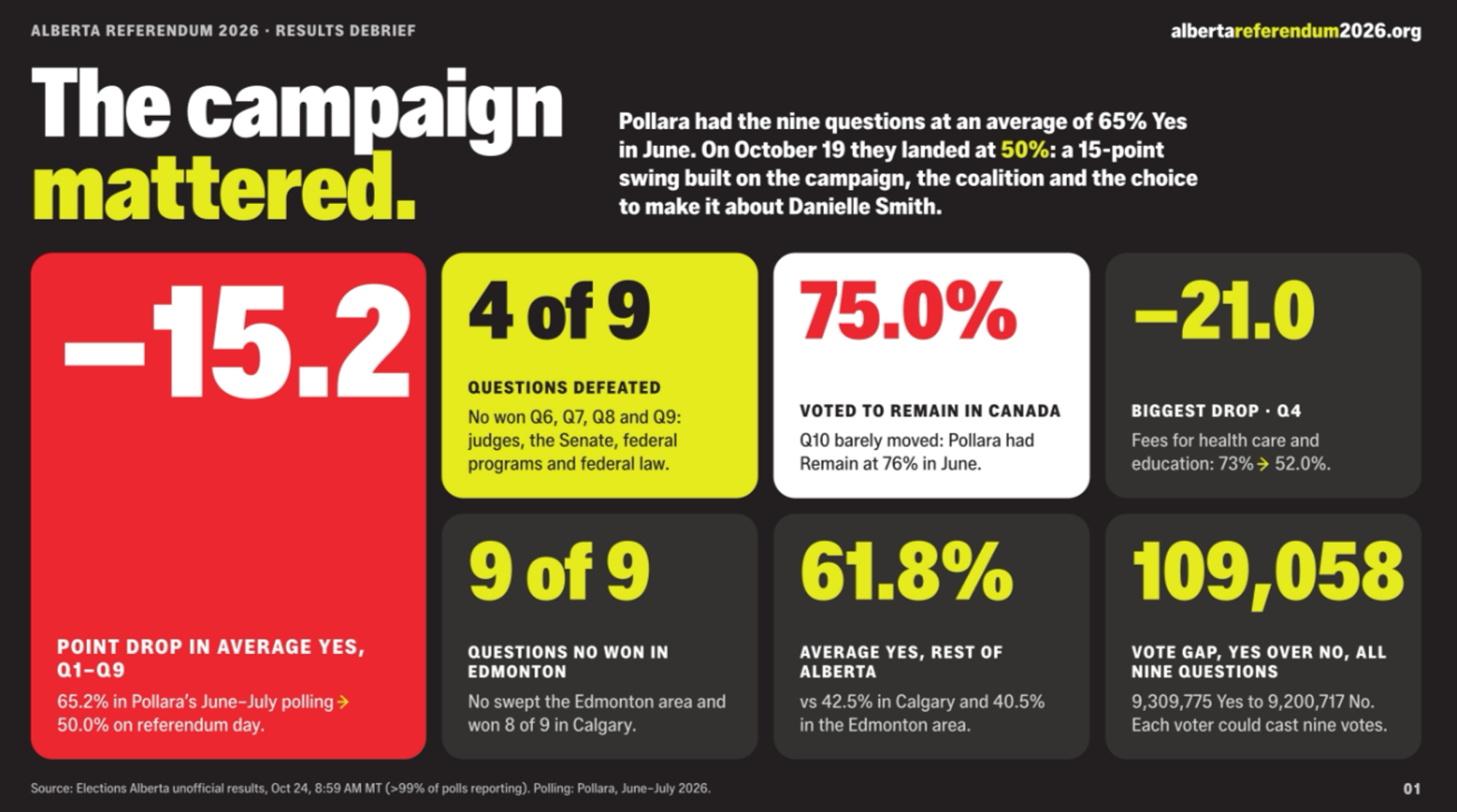
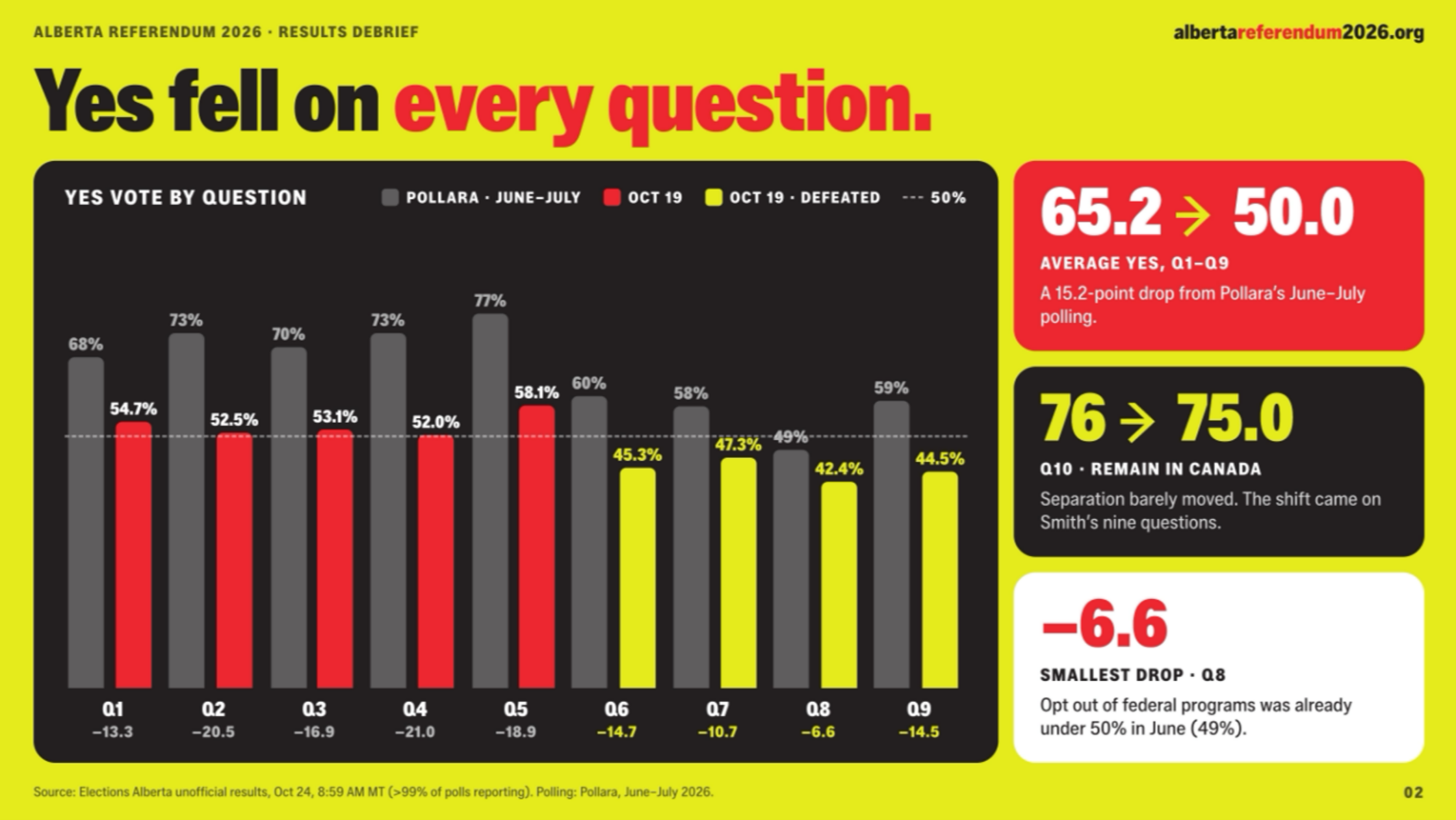
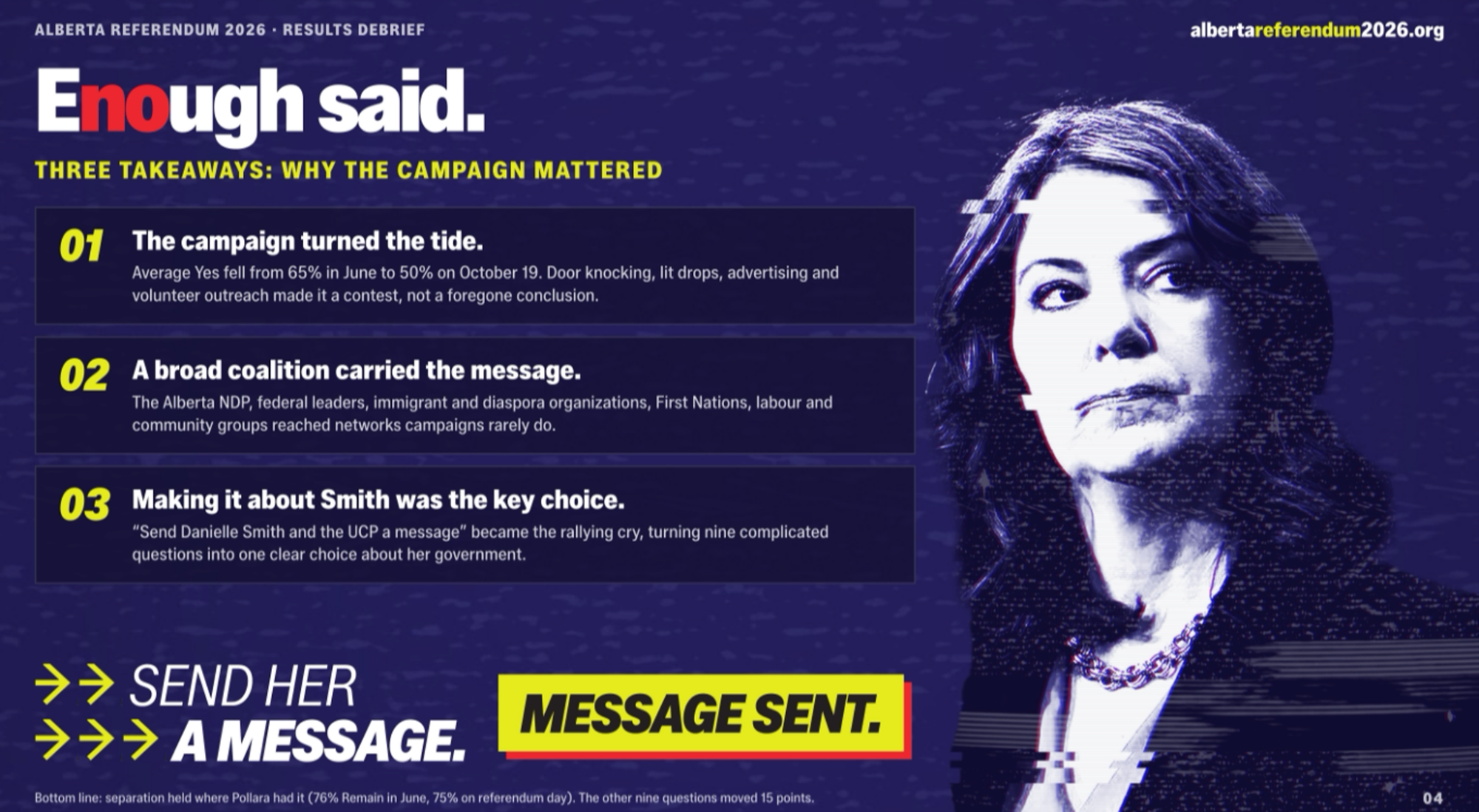
The results were significant. Polling and June and July by Pollara showed an average of 65.2% support across the government’s nine policy questions. By October 19, however, the average ‘yes’ vote was just 50% — a decline of 15.2 percentage points. Support fell significantly on every single question. Four of the nine questions were defeated province-wide, including proposals to give Alberta more control over selecting judges, abolish the Senate, opt out of federal programs while keeping federal funding, and give provincial laws priority over federal laws in certain areas.
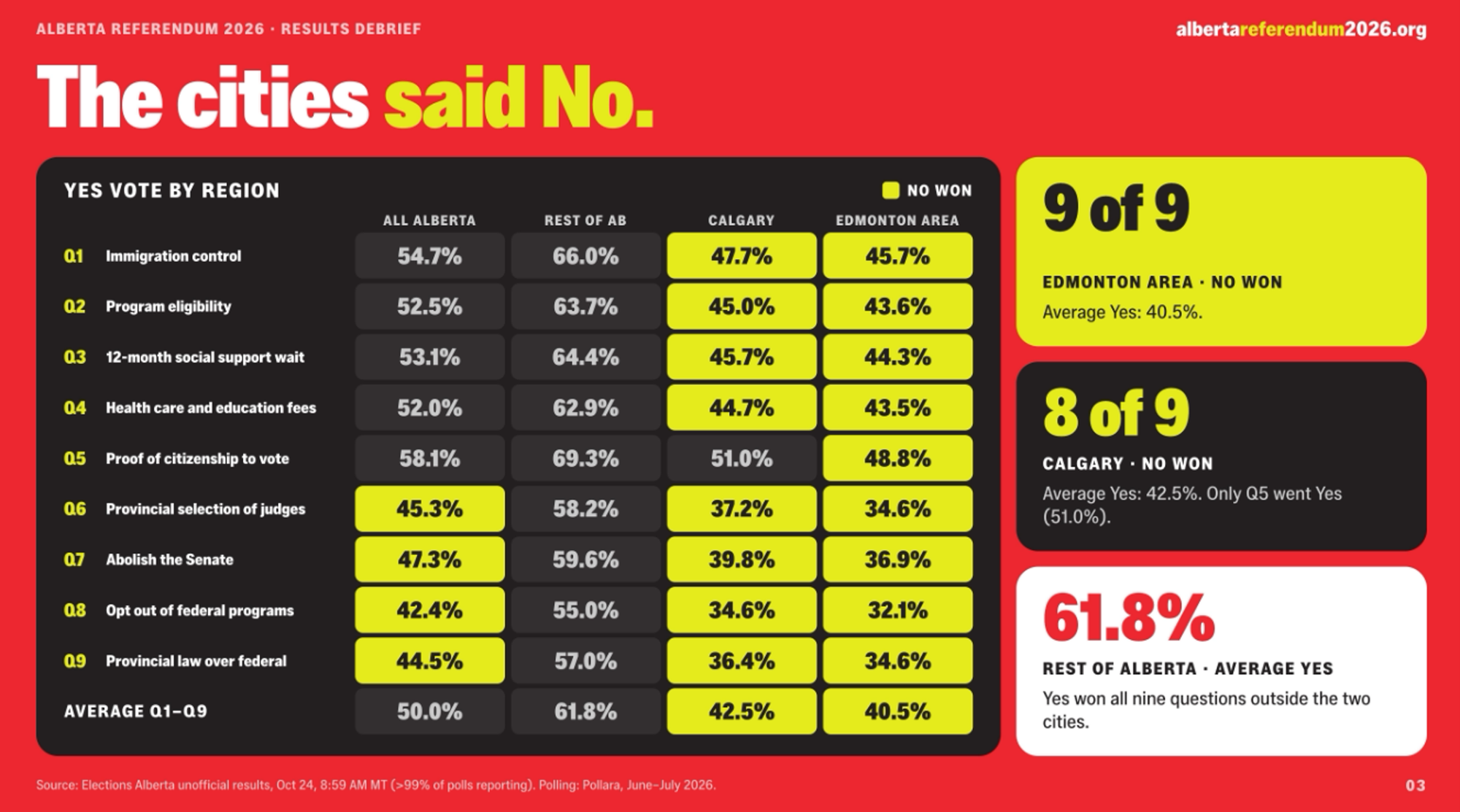
The regional results were even more striking. Edmonton voted ‘no’ on all nine questions and Calgary voted ‘no’ on eight of nine. Meanwhile, 75% of Albertans voted to remain in Canada. The government won five of its nine policy questions, but by much smaller margins than early polling suggested. It was not an overwhelming endorsement of the UCP government’s agenda.
No single effort or factor can claim all the credit for the shift from summer 2026 to referendum day, but PIA’s campaign mattered. The initiative helped Albertans understand the referendum as a reflection of the Smith government’s priorities. By October 19, Albertans could send Premier Smith the message that we reject her government’s divisive ballot questions and a mandate for this agenda. PIA concluded the referendum with new and important gains, aside from the rejection of a strong Smith government mandate: a functioning coalition, trained organizers, volunteers, community relationships, and the foundation for a movement.
A New Fight
The referendum was barely wrapped up when the issue of Alberta’s electoral boundaries came to the forefront, after simmering on the back burner during the separatist moment. In March 2026, Alberta’s original Electoral Boundaries Commission released its report endorsed by the majority of the commission’s members, after extensive public consultations through hearings and submissions. The majority of this commission recommended 89 new electoral divisions, an increase from its current 87 seats, to reflect Alberta’s growing population.
Commission chair Justice Dallas Miller’s fifth recommendation, found in the report’s conclusion, offered a rebalancing of rural and urban electoral districts: the restoration of two rural seats to bring the total number in the legislature to 91, without completely reworking the commission’s proposed boundaries.
The UCP government’s appointed members to the commission, however, could not accept the majority report. The UCP introduced Motion 37 to legislature in April 2026 to set up another panel for a minority report with a different 91-seat proposal. The new panel did not hold public consultations. On November 2, the “independent advisory panel” delivered its report and endorsed its proposals while facing heavy criticism that it diluted the voting power of urban areas.
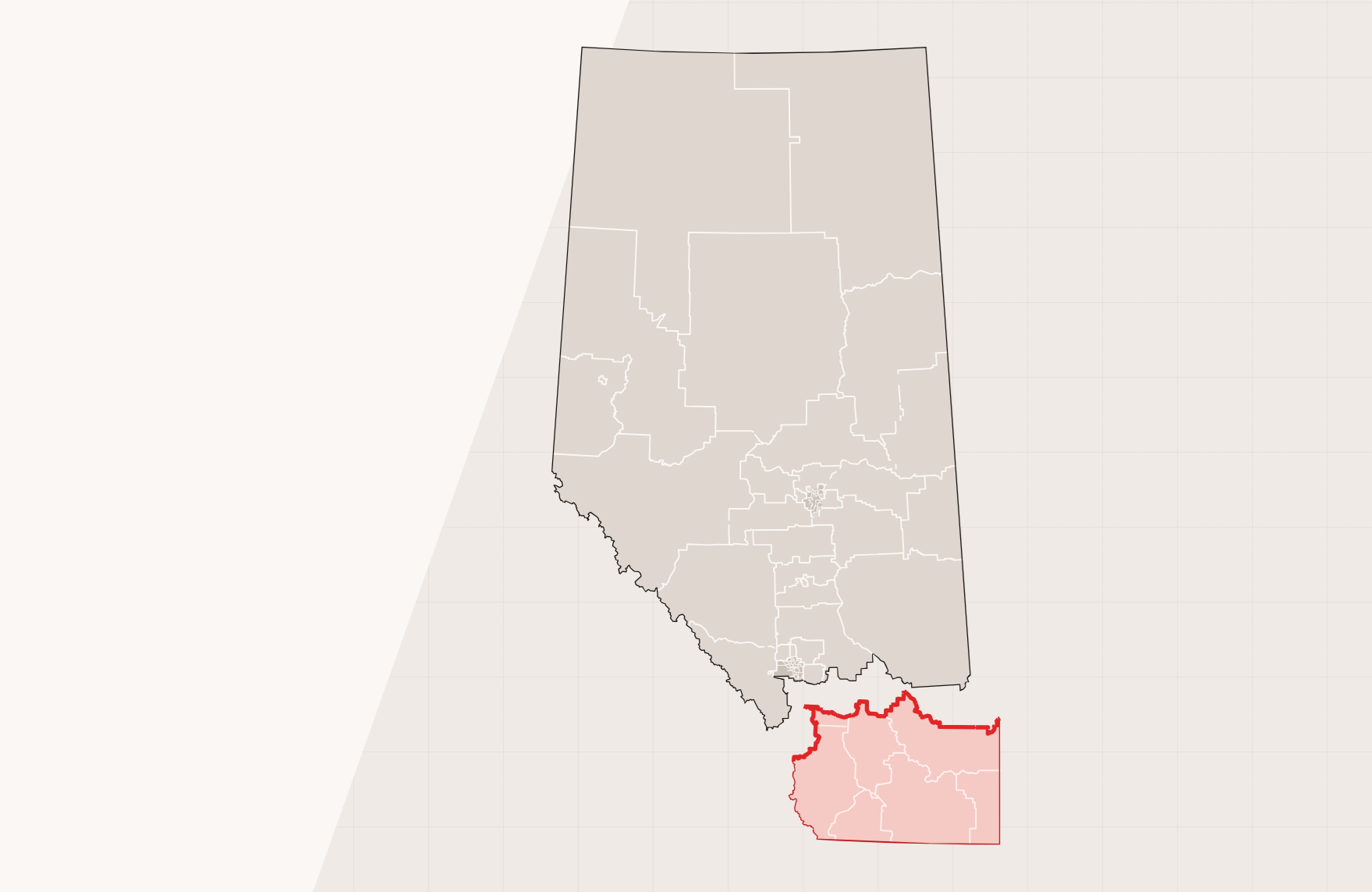
The independent advisory panel’s map had made significant changes to the original commission’s proposal, especially around the riding boundaries for Calgary and Lethbridge. Lethbridge, for example, would have its current two electoral districts divided into four ridings, with three of them expanding and mixing parts of the urban centre with surrounding rural communities. There are similar concerns about the new urban and rural boundaries around Calgary.
The Alberta UCP government has drawn electoral boundaries that might benefit the party, but that is only part of the controversy. The real question Albertans face is whether the government has gone too far in changing the boundaries that communities no longer have effective representation.
Based on Alberta NDP leader Naheed Nenshi’s recent comments, the Official Opposition is planning on a legal challenge to the new boundaries. PIA is also consulting with legal experts on whether to bring our own challenge, potentially working with affected communities and First Nations. There are some important legal precedents here, including cases where courts have intervened when governments or boundaries commissions failed to properly consider the rights of communities to effective representation.
In Nova Scotia, the provincial government had interfered with an independent electoral boundaries commission, preventing it from properly considering the representation of Acadian communities. In 2017, the Nova Scotia Court of Appeal ruled that this violated Section 3 of the Charter, which protects the right to effective representation. The rejection of the government’s proposed boundary changes questioned whether the commission had been allowed to properly consider and consult the people it was drawing boundaries around. The proposed changes would have split Acadian communities, lending to potentially less representation for their population centres.
In New Brunswick’s Raîche v. Canada (2004), the Federal Court struck down proposed federal electoral boundaries that moved several French-speaking Acadian communities out of Acadie–Bathurst and into the neighbouring Miramichi riding. The court found that the boundaries commission had put too much emphasis on keeping riding populations equal and had not properly considered the communities of interest it was dividing.
Though these cases were aimed at protecting democratic representation for minority communities, they are still precedent setting for proposed changes to boundaries in Lethbridge and Calgary, where the new proposals would split up established urban communities whose issues and priorities would differ from the surrounding rural areas they would become attached to. While Alberta’s proposed boundaries are not automatically illegal, it does show that these decisions can be challenged and overturned in court when deemed undemocratic.
There are serious questions about the democratic process behind the boundary changes, whether effective representation is enabled, and whether the UCP government has respected the independent commission’s work. Post-referendum, it is yet another example of Premier Smith’s questionable judgment and priorities.
Where We Go From Here
The referendum questions were designed to divide Albertans and scapegoat communities – debating the questions would be ineffective. Instead, we used the referendum to make the bigger case that the government was focused on the wrong things, wasting time and money, and ignoring the issues Albertans cared about. That became the reason to vote “no” on all questions.
Out of our campaign, it was clear that Albertans were frustrated with Smith. They did not trust her and thought the UCP government was focused on the wrong things. Once the referendum became a way to send her a message that Albertans rejected this agenda and its priorities, the whole debate changed. That’s the part we want to keep going.
Post-referendum, PIA is still finding that healthcare, education, affordability, and public services are still major issues this government is not prioritizing. To continue distracting Albertans from this negligence, they have now prioritized this electoral boundaries fight.
PIA has just launched Fair Maps: a campaign to challenge the UCP’s US-style political redrawing of the electoral boundaries. For PIA, the electoral boundaries campaign gets at something basic made clear by the referendum: can Albertans trust this government to play by the rules and make decisions in the public interest, or is it more interested in looking after itself?
The referendum showed what happens when Albertan civil society starts pulling in the same direction. We changed a political debate that favoured division into a movement that fought for unity. We must continue in that direction. Premier Danielle Smith and the UCP must be held accountable for their record, their decisions, and the trust they keep breaking with Albertans. Albertans want better healthcare, schools, and government that fights for affordability and respects democracy. The issues may change, but we cannot lose sight of the bigger picture.